
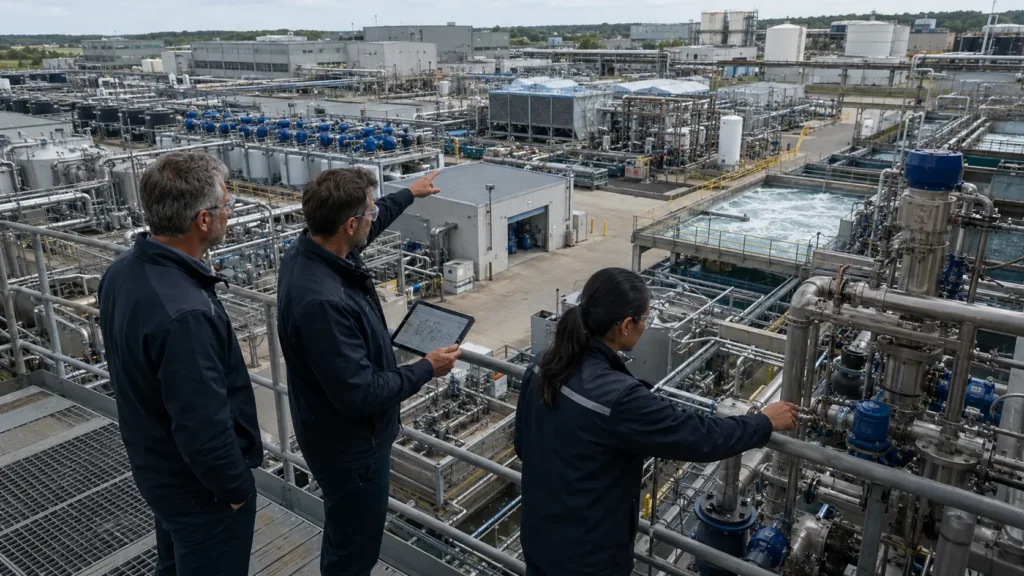
A sector map of stream origins, co-contaminants and the objectives that shape treatment.
Controlled principleA sector label is a screening prior, not a design basis. It tells the owner what to investigate first; it does not establish the feed composition, recovery limit or treatment train. |
|---|
2.1 Origin is the first layer of characterization
High-salinity wastewater is not produced by one industrial operation. It can be inherited from a geological fluid, created when water is removed, generated by deliberate process chemistry, or concentrated in a separation and recycle loop. Most real streams combine two or more of these mechanisms. The practical value of the sector map is therefore not that it predicts a flowsheet, but that it explains how salts and non-salt contaminants entered the water and which operating objective created the stream.
This is why the stream name should preserve both sector and unit operation: “refinery desalter water”, “FGD wastewater”, “mine dewatering water”, “textile dye-bath purge” or “advanced-reuse RO concentrate” is more useful than “brine”. Origin points to the species that were inherited, added, rejected, reacted or allowed to accumulate. It also points to the residuals that will appear when the stream is treated.
A sector is not one wastewaterA power station, refinery, mine or chemical plant can generate several chemically incompatible saline streams. Premature blending may convert recoverable product, reusable water or manageable residuals into one more difficult mixed waste. |
|---|
2.2 Four mechanisms create most high-salinity streams
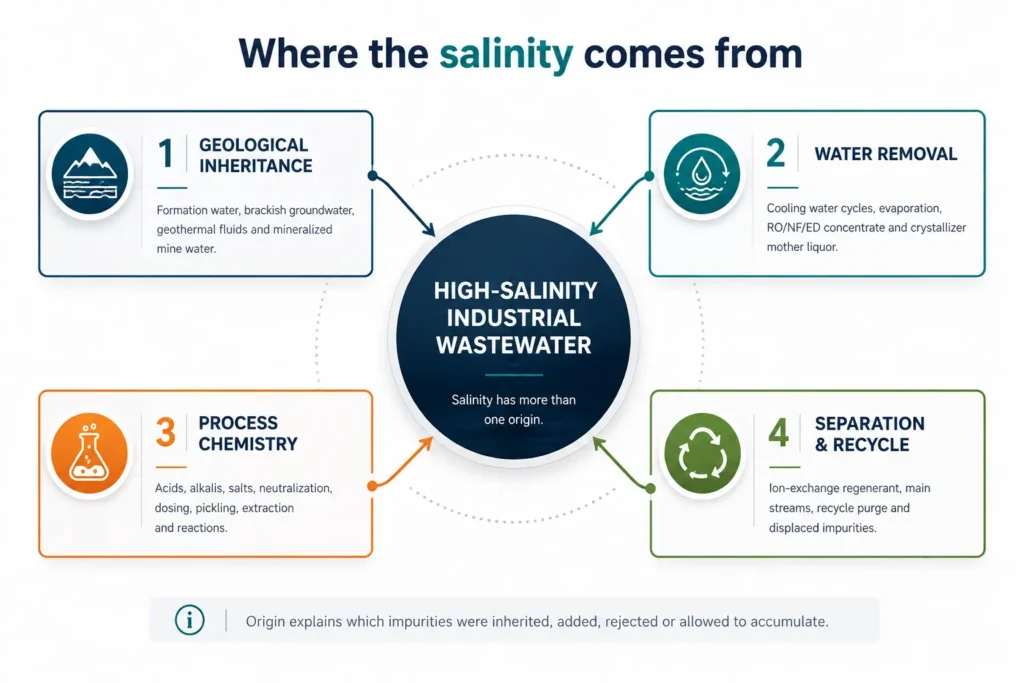
Figure 2.1. Four mechanisms by which salinity enters or accumulates in industrial wastewater.
Figure basis: Brine Consulting editorial synthesis from the controlled terminology and sector brief, supported by the sector-specific source documents cited in this chapter. The diagram is conceptual, not a mass balance.
| Origin mechanism | Typical stream forms | What the origin predicts | Common sectors |
|---|---|---|---|
| Geological inheritance | Formation water, brackish or hypersaline groundwater, geothermal fluids, mine water. | Major ions, trace elements, dissolved gases and temperature reflect the reservoir or ore body; composition may change by location and time. | Oil and gas, mining, geothermal/lithium, inland desalination. |
| Water removal and concentration | Cooling cycles, evaporation, membrane concentration, dewatering and crystallization. | The retained stream contains rejected feed constituents plus treatment chemicals; saturation and osmotic pressure rise nonlinearly. | Power/cooling, RO and water reuse, food concentration, chemical manufacture. |
| Process chemistry and product contact | Acid/alkali use, neutralization, dyeing, pickling, extraction, reactions, product washing and preservation. | Salts may be deliberately added or formed stoichiometrically; product losses, solvents, catalysts and pH swings often matter as much as TDS. | Chemicals/fertilizers, metals, textiles, pharmaceuticals, food and beverage. |
| Separation, regeneration and recycle purge | Ion-exchange regenerant, softener waste, scrubber liquor, recycle purge, mother liquor and cleaning waste. | Displaced ions and rejected impurities accumulate with unused reagent, degradation products and cleaning chemicals. | All sectors with closed loops, membranes, cyclic media or crystallization. |
Table 2.1. Stream origin predicts the first analytical and operational questions, not the final process design.
2.3 Utility and resource-extraction sectors
Power and cooling systems. Saline streams arise mainly through cycles of concentration and air-pollution-control or solids-management operations. Typical names include cooling-tower blowdown, boiler blowdown, flue-gas-desulfurization wastewater, bottom-ash transport water, combustion-residual leachate and source-water-treatment concentrate. EPA treats these as distinct wastewater streams because their pollutant sources and control requirements differ. For screening, hardness, sulfate, silica, chloride, treatment chemicals and—where coal-combustion residuals are involved—trace elements and selenium are more useful starting points than a plant-wide average TDS. The project objective is often utility-water recovery, discharge compliance or reduction of the final thermal/ZLD load.
Mining and mineral processing. The main streams include mine dewatering, pit or underground inflow, acid mine drainage, mineral wash water, scrubber water, process water, tailings return water and hypersaline groundwater. EPA’s mining categories explicitly distinguish water from extraction, dewatering, crushing, milling, washing, beneficiation and stormwater because geology and process route control the chemistry. Sulfate, acidity or alkalinity, hardness, dissolved metals, suspended mineral solids and beneficiation reagents may dominate. At remote mines, the controlling objective may be reliable process-water supply and tailings integration rather than the highest possible water recovery.
Oil and gas production. Produced water and flowback combine formation water, injected water and production chemicals. The USGS national database records physical properties, major and trace inorganic chemistry, organics and isotopes because basin, formation, well and operating history materially change the feed. Oil, dissolved organics, sulfides, iron, barium, strontium, radionuclides and extreme salinity may be relevant, but none should be assumed without basin- and operation-specific data. Reuse, transport, injection, evaporation and selective treatment must therefore be screened before a default ZLD or mineral-recovery platform is proposed.
Geothermal and lithium operations. Geothermal production brine is both a heat-transfer fluid and a mineralized geological water. Where lithium recovery is considered, silica, iron and other interfering species may need removal before a selective extraction circuit; the remaining brine still requires a credible reinjection route. DOE’s geothermal guidance describes precipitation and selective capture as parts of a multi-step system, not as evidence that every geothermal brine is a bankable lithium feed. Temperature, scaling, corrosion, reinjection compatibility and competing-ion ratios remain central.
| Sector | Typical high-salinity stream names | First chemistry and residual risks to screen | Common project objectives |
|---|---|---|---|
| Power & cooling | Cooling-tower blowdown; boiler blowdown; FGD wastewater; bottom-ash transport water; combustion-residual leachate; water-treatment concentrate. | Hardness, sulfate, silica, chloride, treatment chemicals, trace elements in relevant coal streams. | Utility-water recovery; permit compliance; reduce thermal finishing and solids burden. |
| Mining & mineral processing | Mine dewatering; pit water; acid mine drainage; wash/scrubber water; process and tailings-return water; hypersaline groundwater. | Sulfate, metals, acidity/alkalinity, hardness, TSS, reagents and strong site variability. | Process reuse; tailings integration; reduced freshwater and hauling; stable remote operation. |
| Oil & gas | Produced water; flowback; waterflood return; separator drains; treatment residuals. | Formation salts, oil, organics, sulfides, Fe, Ba/Sr, possible radionuclides, production chemicals. | Reuse or injection; transport reduction; selective constraint removal; minimized thermal duty. |
| Geothermal / lithium | Production brine; separator brine; DLE pretreatment residue; wash/eluate streams; reinjection brine. | Temperature, silica/iron, scale formers, metals, gases, competing ions and reinjection constraints. | Heat/power production; stable reinjection; selective product recovery only where qualified. |
Table 2.2. Utility and resource-extraction sectors: first-pass stream, risk and objective map.
2.4 Process and manufacturing industries
Refineries and petrochemicals. A refinery generates several distinct saline and chemically reactive streams: desalter water, sour water, other process wash waters, spent caustic, tank bottoms, cooling-tower and boiler blowdown, and residuals from source-water treatment such as ion-exchange regenerant or RO concentrate. EPA’s refinery process summary shows why these streams should not be collapsed into one “refinery brine”: crude washing, steam contact, acid-gas removal and chemical extraction introduce different oils, dissolved organics, sulfides, ammonia, salts and pH conditions. Segregation and internal reuse are usually the first economic questions.
Chemicals and fertilizers. Mother liquors, neutralization brines, process condensates, scrubber liquors, gypsum-pond water, crystal wash water and equipment-cleaning streams can contain stoichiometric salts, excess reagents, product losses and highly specific impurities. EPA identifies process condensate, cooling and boiler blowdown, gypsum-pond water and crystal wash water among fertilizer-manufacturing wastestreams. Nitrogen, phosphorus, fluoride, acidity/alkalinity and product-specific ions may control the treatment sequence. Campaign segregation can protect both water recovery and product recovery.
Pharmaceuticals. Fermentation, extraction, chemical synthesis, formulation and research operations generate different batch streams. High salinity may arise from pH control, quenching, extraction, product isolation and cleaning, while COD, solvents, active compounds and campaign variability may dominate treatability. The first opportunity is often to isolate product-rich or solvent-rich streams before they are diluted into a saline central effluent. EPA’s five pharmaceutical subcategories reinforce the need to preserve the process origin in the stream name.
Steel, nonferrous metals and metal finishing. Salt-bath descaling, acid pickling, alkaline cleaning, plating and rinsing, wet air-pollution control, leaching and cooling produce streams with metals, acids, alkalis, chloride, sulfate, nitrate, suspended solids and oil. EPA’s iron-and-steel and nonferrous-metal descriptions show that wastewater varies with forming, finishing, extraction and scrubber operations. Selective capture or rinse reuse may be realistic only when individual baths and rinses remain segregated.
Textiles. Scouring, bleaching, mercerizing, dyeing, printing, washing and special finishing generate high-strength, often batch-variable wastewater. Electrolyte salts used in dyeing can coexist with dyes, surfactants, COD, sulfide, chromium and specialty finishing chemicals. EPA lists these operations separately because fiber, product and finishing route change the waste. High-salt dye-bath or rinse streams should be identified before blending with lower-salinity biodegradable wastewater.
Pulp and paper. Salinity is commonly tied to chemical-recovery cycles, bleach-plant or deinking operations, utility blowdown and closed-loop accumulation. The same facility may contain high-organic, high-colour streams and smaller inorganic purges with very different reuse and treatment roles. The sector label therefore directs attention to sulphur/sodium chemistry, chloride and potassium accumulation, suspended fibre, colour and COD, but mill-specific pulping and recovery configuration must control the design.
Food and beverage. The saline fraction is often localized in product brines, whey or by-product liquids, ingredient and preservation streams, water-softener regenerant, membrane concentrate, utility blowdown and cleaning solutions. Product losses can make COD, fats, proteins and nutrients more important than salt concentration. EPA’s dairy guidance identifies equipment cleaning, spills, processing losses, spoiled products and cleaning compounds as principal wastestreams; this supports a source-segregation strategy before end-of-pipe concentration.
| Sector | Typical high-salinity stream names | First chemistry and residual risks to screen | Common project objectives |
|---|---|---|---|
| Refining / petrochemicals | Desalter water; sour water; process wash; spent caustic; tank bottoms; cooling/boiler blowdown; IX/RO residuals. | Oil and dissolved organics, sulfides/ammonia, salts, pH, suspended solids and source-water chemistry. | Segregate reusable water and reactive wastes; protect biology; reduce discharge and disposal. |
| Chemicals / fertilizers | Mother liquor; neutralization brine; process condensate; scrubber liquor; gypsum-pond water; crystal wash; cleaning waste. | Product-specific ions, N/P/F, solvents/COD, pH, catalysts, stoichiometric salts and batch variability. | Prevent product loss; recover internal chemicals; isolate incompatible campaigns; manage solids. |
| Pharmaceuticals | Fermentation residual; extraction/mother liquor; synthesis quench; formulation wash; solvent/CIP streams. | COD, solvents, active compounds, specific salts, pH extremes, toxicity and campaign changes. | Source segregation; product/solvent recovery; robust batch equalization; protect downstream biology. |
| Steel / nonferrous / metal finishing | Pickling and rinse water; salt-bath descaling; alkaline cleaning; plating rinse; leach liquor; scrubber and cooling water. | Metals, chloride/sulfate/nitrate, acid/alkali, oil, TSS and corrosion risk. | Rinse reuse; metal or acid recovery; segregate concentrated baths from dilute rinses. |
| Textiles | Scouring; bleaching; mercerizing; dye bath; print/finish wash; high-salt rinse; water-treatment concentrate. | Dyes/colour, COD, salts, surfactants, sulfide, metals and highly variable campaigns. | Segregate dye-bath salts; recover water where quality permits; avoid poisoning biological treatment. |
| Pulp & paper | Recovery-cycle purge; bleach or deinking wastewater; evaporator condensate; utility blowdown; fibre-rich wash water. | COD/colour, sulphur and sodium chemistry, chloride/potassium accumulation, TSS and scale formers. | Maintain chemical-recovery cycle; reuse water; control non-process-element accumulation. |
| Food & beverage | Product brine; whey/by-product liquid; CIP and wash water; softener regenerant; RO concentrate; utility blowdown. | BOD/COD, fats/proteins, nutrients, chloride, cleaning chemicals and microbiology. | Prevent product loss; segregate high-organic and high-salt streams; reuse water; reduce disposal. |
Table 2.3. Process and manufacturing sectors: first-pass stream, risk and objective map.
2.5 Waste-management and advanced-water-treatment streams
Landfill leachate. Leachate is produced as water passes through heterogeneous waste and mobilizes degradation products and dissolved constituents. Salinity may coexist with ammoniacal nitrogen, COD, metals, persistent organics and emerging contaminants; composition changes with waste type, landfill age, climate and recirculation. EPA requires leachate collection and treats the landfill wastewater category separately, which is a reminder that a single average analysis is particularly weak for this stream. Concentrating leachate can also transfer contaminants into a smaller but more difficult residual.
Inland desalination and water reuse. Brackish-water RO concentrate, softener regenerant, membrane backwash, CIP waste and advanced-water-treatment RO concentrate are separation residuals rather than raw geological brines. They contain the rejected feed salts and contaminants, plus treatment chemicals and any transformation created upstream. Reclamation’s concentrate-management work frames inland concentrate as a systems problem involving recovery, treatment and disposal alternatives, while EPA notes that RO concentrate from potable-reuse treatment can contain high levels of regulated contaminants and can be costly to manage inland. The baseline disposal route and limiting ions should therefore be defined before further recovery is pursued.
Concentrate is a fingerprint of the upstream processThe composition of RO, NF, ED or other concentrate cannot be inferred from the source-water TDS alone. Stage recovery, pretreatment, chemical dosing, recycle, membrane selectivity and cleaning history all change the retained stream. |
|---|
2.6 The sector–stream–risk matrix
The matrix below is a screening device for data requests and site interviews. A dark cell does not mean that one sector is more hazardous than another, nor does it mean the issue will be present at a particular plant. It means that the risk family is often important enough to investigate early because the sector and stream origin can plausibly make it a controlling constraint.
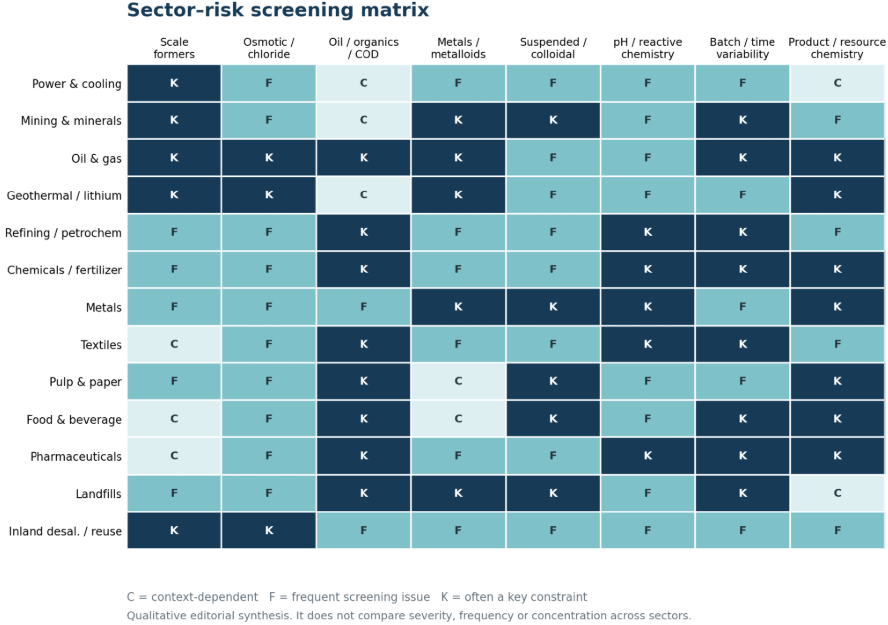
Figure 2.2. Qualitative sector–stream–risk screening matrix.
Figure basis: editorial synthesis of the sector descriptions in and Brine Consulting internal sources S1, S5 and S6. C/F/K marks are qualitative prompts only; they are not measured frequencies, concentrations or comparative risk scores.
2.7 What sector knowledge can and cannot do
| Discipline | Application |
|---|---|
| Use sector knowledge to | Name likely source units and keep streams segregated during sampling. |
| Use sector knowledge to | Build a first analytical list for major ions, scale formers, organics, metals, gases, process additives and variability. |
| Use sector knowledge to | Identify the owner’s likely value driver: process reuse, water security, discharge capacity, liability reduction, product loss prevention or selective recovery. |
| Do not use sector knowledge to | Assign a “typical” TDS, recovery, energy use, CAPEX, OPEX or product yield without a stated source and boundary. |
| Do not use sector knowledge to | Select a membrane, evaporator, crystallizer or valorization platform before the actual chemistry and residual route are known. |
| Do not use sector knowledge to | Blend incompatible streams for convenience before checking whether segregation creates a simpler reuse, recovery or disposal route. |
Table 2.4. Proper and improper use of sector information.
2.8 First-pass questions for the owner
Before requesting a treatment proposal, identify each saline stream separately and answer the following questions:
- What unit operation creates the stream, and which raw materials, products, reagents or geological fluids contact it?
- Is salinity inherited, added by process chemistry, created by reaction, or concentrated through water removal?
- What changes between normal production, cleaning, start-up, shutdown, rainfall, campaigns, wells, ore zones or seasons?
- Which streams are currently blended, and could segregation preserve product value, biological treatability or a simpler disposal route?
- What is the actual project driver—water recovery, production expansion, permit compliance, reduced hauling/injection, solids control, internal chemical substitution or a qualified product?
- Where do the present liquid and solid residuals go, and which destination is capacity-limited or legally constrained?
- Which claimed product has an internal user or buyer specification, and what is the off-spec fallback?
- What representative sampling and mass-balance evidence is still missing before technology screening can begin?
2.9 Chapter conclusion
High-salinity wastewater appears across utilities, resource extraction, manufacturing, waste management and advanced water treatment, but it does not appear for the same reason. A cooling-tower purge, a produced water, a refinery spent caustic, a textile dye-bath, a landfill leachate and an RO concentrate may all be called “brine”; they do not share a design basis.
Sector and unit-operation origin provide the first map of likely ions, non-salt contaminants, variability, operational constraints and project objectives. That map is valuable because it makes the initial data request more intelligent and reveals where segregation or source reduction may outperform end-of-pipe complexity.
The discipline remains the same as in Chapter 1: sector knowledge directs characterization; it does not replace it. The next step is to define MLD, ZLD and valorization as different objectives before any technology train is selected.
Chapter 2 in one sentenceThe industrial sector tells you where to look first, but the named stream and its measured chemistry determine what the owner should do. |
|---|