
Use product cards to expose the chemistry, specification, residual and maturity conditions hidden by a product name.
Controlled principleA chemical formula is not a product pathway. The same compound can be a reliable internal reagent, a freight-limited bulk commodity, a specialty grade or an unmarketable mixed residual depending on source position, impurity control, product form, scale, geography and evidence maturity. |
|---|
How to read the product cards
Chapter 23 ranked value routes by dependency and bankability. Chapter 24 now applies a consistent evidence format to the priority products named in the master specification: water, calcium carbonate, gypsum, magnesium hydroxide or oxide, sodium chloride, sodium sulfate, potassium salts, bromine, bipolar-membrane acid and alkali, lithium and selected critical minerals. The cards do not pre-select a technology or promise a product. They identify the shortest credible pathway and the reason it may stop.
The source position matters as much as the product. A calcium-rich pretreatment sludge, a sulfate-rich membrane concentrate, a sodium-chloride mother liquor and a trace-metal polishing stream can contain the same elements but require completely different separation, purification and legal routes. Product qualification therefore starts at the exact process location where the candidate stream is created.
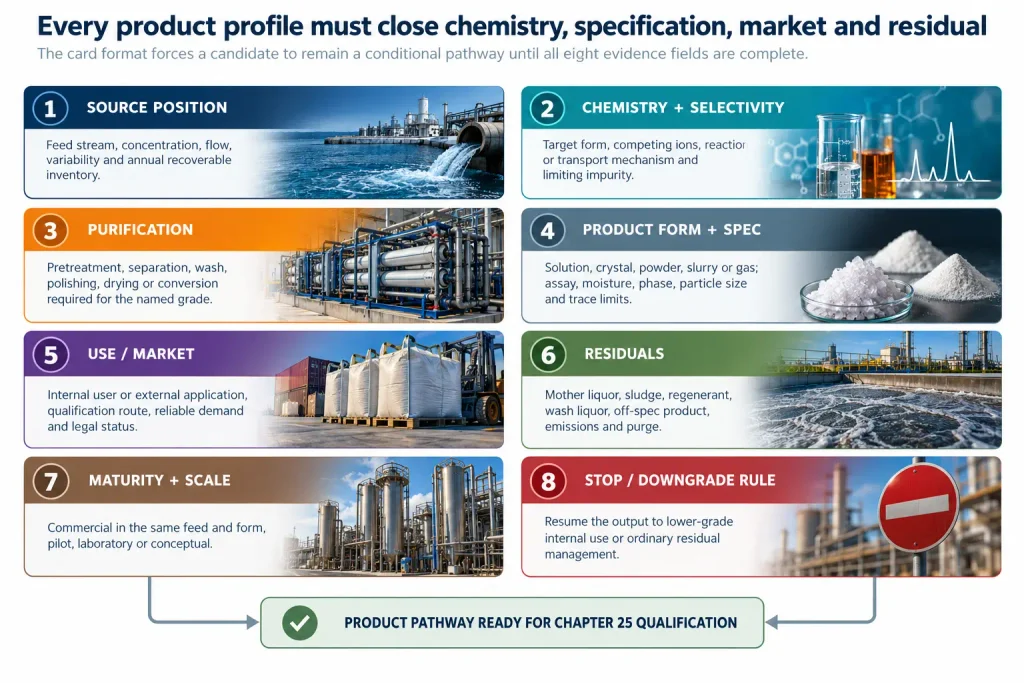
Figure 24.1. Required product-card anatomy. Every profile closes the same eight evidence fields.
| Candidate | Most credible first route | Best source condition | Dominant impurity / constraint | Required delivered form | Primary residual | Maturity of brine-derived route |
|---|---|---|---|---|---|---|
| Recovered water | Internal fit-for-purpose reuse | After concentration or phase separation with a defined end use | Volatiles, boron, organics, ammonia, trace metals or microbiology | Water meeting the named use specification | Concentrate, reject, cleaning waste and off-spec water | Commercial treatment technologies; reuse qualification is site-specific |
| CaCO3 | Internal use or local bulk mineral | Calcium-rich stream before Mg precipitation or sulfate concentration | Mg, sulfate, silica, metals, organics and retained liquor | Controlled mineral phase, moisture and PSD | Filtrate, wash liquor, fines and off-spec mixed carbonate | Commercial precipitation; brine-derived product route pilot/site-specific |
| Gypsum | Internal/bulk route where sulfate removal is already required | Ca- and sulfate-bearing stream with manageable competing salts | NaCl, Mg, trace metals, organics and mother liquor | CaSO4·2H2O with defined purity, moisture and crystal form | Mother liquor, wash liquor and fines | Commercial crystallization chemistry; brine product qualification conditional |
| Mg(OH)2 / MgO | Internal reagent or qualified specialty/bulk grade | Mg-rich stream after prior Ca control | Ca, carbonate, silica, boron, Fe/Al and chloride retention | Hydroxide slurry/cake or calcined oxide with reactivity specification | High-pH filtrate, wash liquor, calciner gas/dust and off-spec solids | Commercial commodity production; brine recovery mainly pilot/demo |
| NaCl | Internal chlor-alkali/softening feed or local bulk salt | NaCl-dominant liquor after multivalent and impurity removal | Ca/Mg/sulfate/K/Br/organics and retained mother liquor | Solution or crystals to user-specific purity/moisture/PSD | Bittern, purge, wash liquor and mixed salts | Most mature mineral route; large-scale brine valorization mainly water + NaCl |
| Na2SO4 | Internal or bulk chemical where a local user exists | Sulfate-rich, low-Ca stream with phase window separated from NaCl | NaCl, K salts, Mg and hydrate/polymorph control | Anhydrous or decahydrate product to buyer specification | NaCl-rich liquor, antisolvent/wash recovery and off-spec hydrate | Commercial commodity; mixed-brine recovery application-specific/pilot |
| K2SO4 / KCl | Internal fertilizer feed or qualified regional product | Late-stage bittern or selectively enriched K stream | Na, Mg, Ca, sulfate/chloride balance and trace contaminants | Fertilizer or industrial grade with nutrient/impurity specification | Mg-rich bittern, mother liquor and purification wastes | Commodity mature; recovery from desalination brine generally emerging |
| Bromine | Merchant specialty only after concentration and buyer screen | Bromide-enriched bittern or natural high-bromide brine | Chloride dominance, organics, iodide, oxidant demand and gas safety | Elemental bromine or qualified bromide solution | Debrominated brine, scrubber liquor and oxidant/reductant waste | Commercial from concentrated natural brines; dilute desalination route emerging |
| BPED HCl / NaOH | Internal acid/base displacement before merchant sale | Clean NaCl-rich brine with hardness and organic control | Multivalent ions, organics, co-ion leakage and product salt contamination | Acid/base solution at internal-user concentration and impurity limits | Depleted salt stream, electrode rinse, cleaning and off-spec acid/base | Pilot demonstrated; full-scale brine-derived route emerging |
| Lithium | Specialty/critical-mineral route only after inventory and Mg/Li screening | Lithium-bearing geological, produced-water or geothermal brine; not ordinary seawater by default | Low Li, high Mg/Li, Ca/Na/K, organics, silica and sorbent/solvent stability | LiCl intermediate or battery/technical Li2CO3/LiOH after refining | Li-depleted brine, regeneration/strip solution and purification solids | Commercial in selected brine operations; low-quality/desalination brines emerging |
| B / Sr / Rb-Cs | Selective polishing or niche critical-mineral route | Strongly enriched stream after bulk-ion removal | Very low concentration and overwhelming Na/K/Ca/Mg competition | Qualified borate/strontium or Rb/Cs intermediate | Regenerant, solvent, precipitates and large raffinate volume | Laboratory to early pilot for desalination-brine pathways |
Table 24.1. Product-pathway overview. Maturity refers to the brine-derived route, not the existence of the commodity itself.
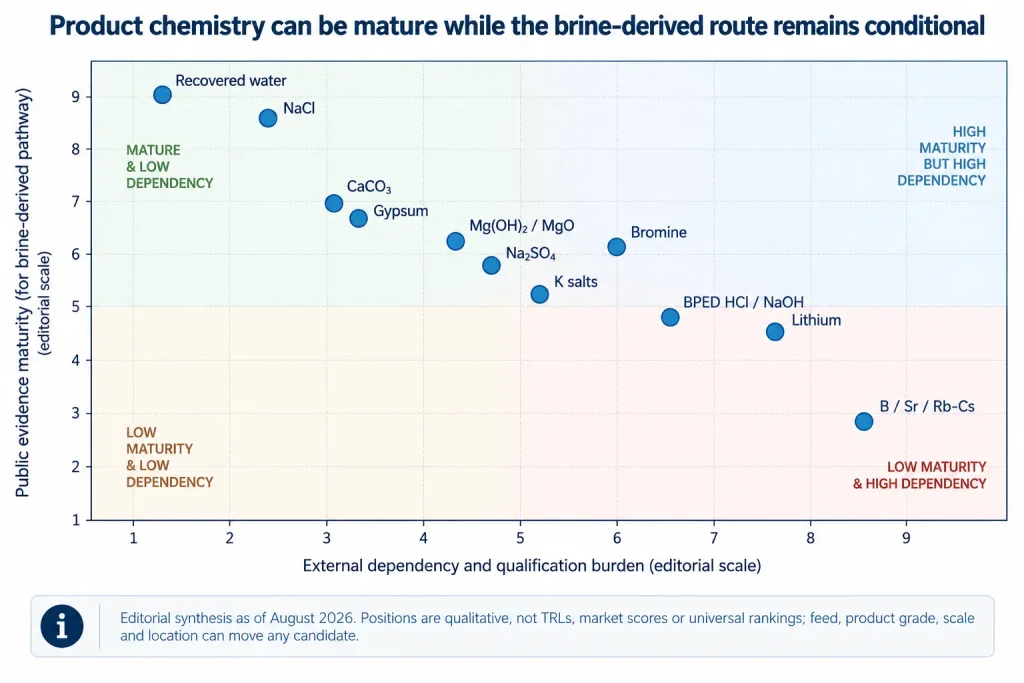
Figure 24.2. Editorial maturity–dependency map as of August 2026. It is not a TRL or market ranking.
Product card — recovered water
Profile anchorWater is the default co-product only when a named reuse or discharge specification is met; high recovery by itself does not create value. |
|---|
| Evidence field | Product-specific pathway |
|---|---|
| Best source position | RO/NF/ED diluate, evaporator condensate, membrane-distillation distillate, ice melt or other recovered-water stream. Keep each source separate because volatile carryover, membrane passage and microbiological risk differ. |
| Chemistry and selectivity | Separation is driven by pressure, electrical potential, vapour pressure, freezing or another defined mechanism. The product boundary must include post-treatment and storage, not end at the separation device. |
| Controlling impurities | TDS and hardness may be low while boron, ammonia, volatile organics, low-molecular-weight organics, silica, oxidant residual, metals or microorganisms still control the use. |
| Purification / conversion | Degassing, activated carbon, ion exchange, polishing RO, disinfection, remineralization, pH/alkalinity adjustment or blending as required by the named use. |
| Product form and specification | Define the use first: boiler make-up, cooling, washing, process water, irrigation, potable augmentation or discharge. Report conductivity/TDS, ions, TOC/COD, volatiles, nutrients, microbes, temperature, corrosion/scaling indices and any sector-specific analytes. |
| Use, market and qualification | Internal fit-for-purpose reuse usually has the shortest qualification chain. External supply requires contracts, storage, distribution and jurisdiction-specific reuse requirements. EPA’s current resources treat industrial reuse as end-use-specific rather than one universal water grade. [3] |
| Residuals and recycle | Concentrate, reject, spent media, disinfectant by-products, cleaning waste and off-spec water. Product-water tanks and distribution can create additional microbiological or corrosion obligations. |
| Maturity and scale | Commercial across many treatment families. The maturity question is whether the complete train consistently meets the site’s end-use specification and availability requirement. |
| Stop or downgrade rule | If no named user values the delivered quality, treat water recovery as disposal-volume reduction rather than product revenue. |
| Primary source boundary | EPA industrial water-reuse resources and Chapter 22 fit-for-purpose rules. [3] |
Product card — recovered water.
Product card — calcium carbonate (CaCO3)
Profile anchorCaCO3 is credible when calcium removal is already required and the process can control mineral phase, magnesium/silica contamination and retained liquor. |
|---|
| Evidence field | Product-specific pathway |
|---|---|
| Best source position | Calcium-rich feed, NF concentrate, softening reactor or staged precipitation before magnesium recovery. Earlier separation from Mg and sulfate generally improves purity. |
| Chemistry and selectivity | Carbonate speciation, pH, alkalinity or CO2 dosing, supersaturation, seeding and residence time determine precipitation and polymorph. Recovery must be distinguished from production of a controlled calcite/aragonite/vaterite grade. |
| Controlling impurities | Mg, sulfate, silica, Fe/Al, trace metals, organics, polymer/coagulant and chloride-rich mother liquor. High ionic strength can change yield, morphology and polymorph. |
| Purification / conversion | Staged Ca removal, seed crystallization, classification, washing and drying; further milling or surface treatment only for a qualified use. Recent brine studies demonstrate selective CaCO3 production under specific chemistries but do not establish a universal product grade. [6–8] |
| Product form and specification | Specify mineralogy, assay, Mg/Si/Fe/Al, chlorides/sulfates, moisture, particle-size distribution, morphology, brightness/colour, bulk density and application-specific reactivity. |
| Use, market and qualification | Internal neutralization, seed, filler or mineral-carbonation route can outrank merchant powder. External PCC/GCC-type markets are specification- and logistics-intensive and cannot be inferred from CaCO3 assay alone. |
| Residuals and recycle | Alkaline filtrate, wash liquor, fines, off-spec mixed carbonates and any CO2 or reagent-derived salts. Filtrate recycle can return the removed limiter. |
| Maturity and scale | Precipitation and mineral processing are commercial. Brine-derived controlled-grade product pathways are mainly laboratory, pilot or site-specific demonstrations. |
| Stop or downgrade rule | Downgrade to internal reagent or managed solid if phase, whiteness, PSD, trace impurities, moisture or local demand cannot be controlled without excessive purification. |
| Primary source boundary | Recent Ca/Mg precipitation and electrochemical separation studies; product claims bounded to tested feeds. [6–8] |
Product card — calcium carbonate (CaCO3).
Product card — gypsum (CaSO4·2H2O)
Profile anchorGypsum recovery is most defensible when sulfate or calcium removal is already a process constraint and the recovered crystal has a named internal or local bulk use. |
|---|
| Evidence field | Product-specific pathway |
|---|---|
| Best source position | Ca- and sulfate-bearing concentrate before uncontrolled scale formation; often after carbonate softening and before deeper membrane or thermal concentration. |
| Chemistry and selectivity | Ion activity, common-ion effects, temperature, water activity, seed and residence time govern gypsum supersaturation and crystal growth. The product route competes directly with unwanted scaling. |
| Controlling impurities | NaCl and Mg-rich mother liquor, carbonate, silica, trace metals, organics and antiscalant. Hemihydrate/anhydrite formation and fine needles can undermine handling and grade. |
| Purification / conversion | Seeded crystallization or fluidized-bed pelletization, solid–liquid separation, washing and controlled drying. A 2024 study demonstrated sulfate recovery as calcium-sulfate pellets in a specific briny feed; another recovered gypsum from tannery RO reject. [9,10] |
| Product form and specification | Confirm CaSO4 hydration state, purity, soluble salts, trace contaminants, moisture, PSD, crystal habit, setting/reactivity where relevant and storage stability. |
| Use, market and qualification | Internal construction-material feed, cement set control, soil amendment or other local use requires application testing and legal acceptance. Freight and low unit value usually dominate merchant routes. USGS treats gypsum as an established large-volume mineral commodity. [4] |
| Residuals and recycle | Sulfate-depleted mother liquor, wash liquor, fines, antiscalant-rich purge and off-spec mixed Ca salts. |
| Maturity and scale | Gypsum production and crystallization are commercial; recovery from complex industrial brines to a qualified product remains feed- and buyer-specific. |
| Stop or downgrade rule | If washing and classification cannot meet soluble-salt or contaminant limits, value it as sulfate-removal solid, not saleable gypsum. |
| Primary source boundary | USGS MCS 2026 and recent gypsum crystallization studies. [4,9,10] |
Product card — gypsum (CaSO4·2H2O).
Product card — magnesium hydroxide and magnesium oxide
Profile anchorMagnesium products can be attractive because Mg inventory is substantial in seawater-type brines, but calcium control, reagent burden, washing and reactivity grade determine the real pathway. |
|---|
| Evidence field | Product-specific pathway |
|---|---|
| Best source position | Mg-rich NF retentate, desalination concentrate after Ca removal, bittern or selected industrial brine. A dedicated Mg step should be placed before NaCl crystallization if Mg would contaminate salt and increase mother-liquor viscosity. |
| Chemistry and selectivity | Mg(OH)2 precipitation requires a controlled high-pH path and solid growth; MgO adds calcination and reactivity control. Selectivity against CaCO3, silica, boron and metals is the central issue. |
| Controlling impurities | Ca, carbonate, silica/silicate, boron, Fe/Al, sulfate, chloride-rich retained liquor, reagent impurities and organics. Gel-like fine solids can dominate dewatering. |
| Purification / conversion | Pre-remove Ca, precipitate/seed Mg(OH)2, age, classify, wash and dewater; calcine only when an MgO user requires defined burn/reactivity. Recent real-brine work reported high-purity Mg(OH)2 under specific staged conditions, while reviews identify Ca co-precipitation and chemical consumption as recurring limitations. [5–8] |
| Product form and specification | Mg(OH)2: assay, Ca/Si/Fe/Al/B, chloride/sulfate, moisture, PSD, surface area and slurry behaviour. MgO: MgO assay, loss on ignition, reactivity/burn grade, surface area, particle size and hydration behaviour. |
| Use, market and qualification | Internal pH control, flue-gas treatment or water-treatment reagent may be stronger than external refractory, environmental or specialty grades. USGS distinguishes magnesium compounds from magnesium metal markets. [4] |
| Residuals and recycle | High-pH filtrate, wash liquor, Ca-rich reject, calciner fuel/electricity and gas/dust, off-spec low-reactivity MgO and spent filter media. |
| Maturity and scale | Magnesium compounds are established commodities and conventional production is commercial; integrated recovery from desalination brine is mainly pilot/demo or site-specific. |
| Stop or downgrade rule | Downgrade to internal neutralization or managed solid if calcium/silica, chloride retention, dewatering, calcination or buyer reactivity requirements make purification disproportionate. |
| Primary source boundary | USGS magnesium-compounds data and recent technical review/real-brine studies. [4–8] |
Product card — magnesium hydroxide and magnesium oxide.
Product card — sodium chloride (NaCl)
Profile anchorNaCl is the most mature mineral product from brine, but it becomes credible only after multivalent ions, organics, moisture and bittern are controlled for a named user. |
|---|
| Evidence field | Product-specific pathway |
|---|---|
| Best source position | NaCl-dominant concentrate or crystallizer feed after Ca/Mg/sulfate/silica management; alternatively a purified brine solution for chlor-alkali or internal regeneration. |
| Chemistry and selectivity | Evaporative/cooling crystallization or solution purification. Phase purity is usually less difficult than removal of retained mother liquor and minor salts. |
| Controlling impurities | Ca, Mg, sulfate, K, bromide/iodide, Fe, organics, antiscalant and moisture. Mixed bittern and hygroscopic impurities cause caking and corrosion. |
| Purification / conversion | Brine purification, controlled crystallization, centrifugation/filtration, washing, drying and classification. Food, pharmaceutical and chlor-alkali routes require separate and much stricter qualification. |
| Product form and specification | Specify solution strength or crystal assay, Ca/Mg/sulfate/K/Br/iodide, insolubles, moisture, PSD, anti-caking additions and application-specific contaminants. Codex CXS 150-1985 is a current reference for food-grade salt but must not be applied to industrial salt by default. [11] |
| Use, market and qualification | Internal chlor-alkali, softener regeneration or process brine can avoid packaging and freight. Merchant de-icing, chemical, food or specialty salt requires grade-specific buyers and logistics. USGS identifies salt as an established large-volume commodity. [4] |
| Residuals and recycle | Bittern, wash liquor, fines, dust, off-spec salt, purge containing K/Mg/Br and dryer/packaging wastes. |
| Maturity and scale | Commercial at very large scale. The 2026 brine-valorisation review notes that large-scale brine mining currently focuses primarily on water and NaCl, unlike most multi-resource schemes. [15] |
| Stop or downgrade rule | If local delivered netback cannot carry washing, drying, storage and freight, use NaCl only as an internal solution or classify the solid honestly as mixed disposal salt. |
| Primary source boundary | USGS MCS 2026, Codex food-grade salt standard and 2026 brine-valorisation review. [4,11,15] |
Product card — sodium chloride (NaCl).
Product card — sodium sulfate (Na2SO4)
Profile anchorNa2SO4 is a real commodity but mixed NaCl–Na2SO4 brines require phase-selective crystallization and a buyer that specifies hydrate form, purity and moisture. |
|---|
| Evidence field | Product-specific pathway |
|---|---|
| Best source position | Sulfate-rich industrial concentrate, bittern or mother liquor after Ca removal and before final mixed-salt dry-out. The NaCl/Na2SO4 ratio and temperature path control feasibility. |
| Chemistry and selectivity | Fractional evaporation, cooling, eutectic/phase-equilibrium control or antisolvent crystallization. Hydrate formation and NaCl inclusion are central. |
| Controlling impurities | NaCl, K salts, Mg, Ca, organics, metals, antisolvent residues and retained mother liquor. |
| Purification / conversion | Purify hardness/metals, select evaporation/cooling/antisolvent route, separate crystals, wash and control hydration/drying. A 2024 process-integration study compared fractional evaporation, cooling and antisolvent crystallization for Na2SO4/NaCl saline effluents. [12] |
| Product form and specification | Anhydrous sodium sulfate or decahydrate as required; assay, NaCl, Fe, insolubles, moisture/water of crystallization, PSD and bulk density. |
| Use, market and qualification | Uses include detergents, pulp/paper, textiles and chemical processes, but local grade and delivered volume control. USGS notes production from natural brines and as a by-product of several chemical processes. [4] |
| Residuals and recycle | NaCl-rich mother liquor, wash liquor, antisolvent recovery/purge, off-spec hydrates and drying emissions/dust. |
| Maturity and scale | Commodity production is commercial. Recovery from mixed industrial brines is application-specific and often pilot/design-stage rather than a standard ZLD product. |
| Stop or downgrade rule | Stop if the process produces unstable hydrate mixtures, NaCl-rich crystals or an antisolvent/recrystallization burden that exceeds the local netback. |
| Primary source boundary | USGS sodium-sulfate information and 2024 crystallization process-integration study. [4,12] |
Product card — sodium sulfate (Na2SO4).
Product card — potassium chloride and potassium sulfate
Profile anchorPotassium salts should be screened as late-bittern products or internal fertilizer inputs, not assumed from total potassium content. |
|---|
| Evidence field | Product-specific pathway |
|---|---|
| Best source position | K-enriched bittern after NaCl removal, selective electrodialysis/extraction concentrate or industrial brine with substantially higher K inventory than ordinary seawater. |
| Chemistry and selectivity | KCl crystallization depends on Na/K/Mg/Cl phase behaviour; K2SO4 may require sulfate availability and conversion/metathesis. Selectivity against abundant Na and Mg is the gate. |
| Controlling impurities | NaCl, MgCl2/MgSO4, Ca, bromide, boron, trace metals and mother liquor. Fertilizer routes add nutrient and contaminant requirements. |
| Purification / conversion | Fractional crystallization, selective membrane/electrochemical concentration, solvent/ion-exchange enrichment or chemical conversion followed by washing and drying. No generic sequence applies. |
| Product form and specification | KCl or K2SO4 assay, K2O equivalent where commercial practice requires it, Na/Mg/Ca/Cl/S, moisture, insolubles, particle size and application-specific contaminant limits. |
| Use, market and qualification | Internal fertilizer blending or a nearby agricultural/industrial user can justify lower logistics burden. Potash is an established fertilizer commodity, but desalination-brine recovery remains much less mature than conventional ore/brine production. [4] |
| Residuals and recycle | Mg-rich bittern, Na-rich reject, conversion-reagent salts, wash liquor and off-spec mixed potash salts. |
| Maturity and scale | Commercial commodity and conventional brine processing exist; recovery from desalination/industrial brines is generally emerging or site-specific. |
| Stop or downgrade rule | Downgrade to mixed-salt management if K is too dilute, Na/Mg rejection is weak or the local fertilizer/product regulatory route is not qualified. |
| Primary source boundary | USGS potash information and general brine-valorisation maturity review. [4,15] |
Product card — potassium chloride and potassium sulfate.
Product card — bromine and bromide products
Profile anchorBromine recovery is credible only from a sufficiently enriched bromide stream with a secure gas/oxidant system and a qualified specialty buyer. |
|---|
| Evidence field | Product-specific pathway |
|---|---|
| Best source position | Natural high-bromide brines, produced-water brines or late desalination bittern after substantial volume reduction. Ordinary SWRO brine generally requires further concentration or selective capture. |
| Chemistry and selectivity | Oxidation of bromide to bromine followed by air/steam stripping, absorption and purification, or selective electrochemical/adsorptive enrichment before oxidation. |
| Controlling impurities | Overwhelming chloride, iodide, organics, sulfide/reductants, metals, suspended solids and oxidant demand. Bromine volatility, toxicity and corrosion dominate plant integration. |
| Purification / conversion | Pre-remove reactive contaminants, concentrate/selectively capture bromide, oxidize under controlled pH/redox, strip, condense/absorb and purify to elemental bromine or a bromide product. |
| Product form and specification | Elemental Br2 concentration/purity, water/chlorine/iodine/organics/metals as required; or a defined bromide salt/solution. Packaging and dangerous-goods controls are part of the specification. |
| Use, market and qualification | Flame retardant intermediates, drilling/completion fluids, water treatment and other chemical uses are specialist markets. USGS tracks bromine as an established commodity, while a 2025 review emphasizes the energy penalty of dilute seawater/desalination sources and the promise of selective electrochemical capture. [13,14] |
| Residuals and recycle | Debrominated brine, scrubber/absorber liquor, oxidant and reductant residues, off-gas treatment, spent sorbent/membrane and contaminated maintenance waste. |
| Maturity and scale | Commercial from selected concentrated natural brines. Recovery from ordinary desalination brine is emerging and depends strongly on prior concentration. |
| Stop or downgrade rule | Stop if bromide inventory, chloride selectivity, oxidant demand, HSE infrastructure or buyer/offtake cannot support a dedicated specialty-chemical plant. |
| Primary source boundary | USGS bromine information and 2025 technology review. [13,14] |
Product card — bromine and bromide products.
Product card — BPED hydrochloric acid and sodium hydroxide
Profile anchorBipolar-membrane acid/base production is strongest as an internal chemical-displacement route; product concentration, salt contamination and membrane durability control external sale. |
|---|
| Evidence field | Product-specific pathway |
|---|---|
| Best source position | Purified NaCl-rich brine or a sodium-salt stream after hardness, suspended solids, organics and incompatible multivalents are controlled. |
| Chemistry and selectivity | Bipolar membranes split water into H+ and OH− while monopolar membranes transport counter-ions. Co-ion leakage and water transport determine acid/base purity and concentration. |
| Controlling impurities | Ca/Mg precipitation, silica, organics, oxidants, suspended solids, multivalent ions, sulfate and membrane-specific foulants. Product salt contamination can be limiting even when current efficiency is high. |
| Purification / conversion | Brine polishing, BPED stack, acid/base circulation and concentration, degassing where required, product storage and optional polishing. Pilot studies have produced HCl and NaOH from NaCl brines, while 2025 work shows membrane properties directly affect acid/base purity. [16–18] |
| Product form and specification | Internal HCl/NaOH concentration, salt content, metals, organics, colour and user-specific strength. Merchant chemical grade adds certification, transport and concentration requirements. |
| Use, market and qualification | Internal pH control, resin regeneration, cleaning or precipitation can avoid purchased chemicals and reduce logistics. Merchant sale is a separate chemical-business case. |
| Residuals and recycle | Depleted salt stream, electrode rinse, stack flush/CIP, off-spec acid/base, gas release and spent membranes. |
| Maturity and scale | Pilot-scale and emerging commercial integration. The unit operation has substantial pilot evidence, but broad full-scale brine-derived acid/base deployment remains limited. |
| Stop or downgrade rule | Use no merchant-sales credit if the internal user cannot accept the produced strength/purity or if concentration and transport dominate value. |
| Primary source boundary | Pilot BPED studies (2023), real-brine optimization (2025) and membrane-selectivity study (2025). [16–18] |
Product card — BPED hydrochloric acid and sodium hydroxide.
Product card — lithium products
Profile anchorLithium recovery is a geological-resource project first and a brine-treatment add-on second; ordinary desalination brine should not receive a lithium revenue credit without exceptional inventory and selectivity. |
|---|
| Evidence field | Product-specific pathway |
|---|---|
| Best source position | Lithium-bearing salar, geothermal, oilfield/produced-water or sedimentary brine; possibly a selectively enriched concentrate. Low-concentration seawater/SWRO brine is a high-dependency route. |
| Chemistry and selectivity | Sorption/ion exchange, solvent extraction, membranes, electrochemical intercalation or precipitation, followed by concentration and refining. Li/Mg and Li/Na selectivity and regeneration stability are central. |
| Controlling impurities | Mg, Ca, Na, K, boron, sulfate, silica, Fe/Al, organics/hydrocarbons and suspended solids. Very low Li and high Mg/Li ratios characterize many low-quality brines. |
| Purification / conversion | Pretreat, selectively capture Li, regenerate/strip to LiCl-rich intermediate, remove impurities, concentrate and convert to Li2CO3 or LiOH; battery grade requires a separate refining and qualification chain. |
| Product form and specification | LiCl intermediate or technical/battery-grade Li2CO3/LiOH with detailed major/trace impurities, moisture, particle form and buyer specification. Battery grade cannot be inferred from Li recovery. |
| Use, market and qualification | Battery and chemical markets are real, but resource, permitting, water balance, reinjection, refining, offtake and price risk dominate. The EU classifies battery-grade lithium as strategic; USGS tracks lithium as a critical commodity. [19,20] |
| Residuals and recycle | Li-depleted brine/reinjection stream, regeneration/strip liquor, wash water, impurity precipitates, sorbent/membrane replacement and off-spec product. |
| Maturity and scale | Commercial lithium-from-brine operations exist, and DLE is commercial/emerging in selected resources. Reviews of low-quality and seawater/desalination brines emphasize continuing selectivity, water, regeneration and scale-up challenges. [20–22] |
| Stop or downgrade rule | Stop if representative Li inventory, Li/Mg selectivity, reagent/water balance, reinjection route or battery-grade refining cannot survive the no-product-revenue and downside cases. |
| Primary source boundary | USGS MCS 2026, EU CRMA, Nature reviews on low-quality brines and membrane/electrochemical DLE. [19–22] |
Product card — lithium products.
Product card — selected critical minerals: boron, strontium, rubidium and cesium
Profile anchorCriticality does not overcome dilution. These pathways require exceptional enrichment, strong selectivity and a specialty receiver before they deserve more than laboratory attention. |
|---|
| Evidence field | Product-specific pathway |
|---|---|
| Best source position | Boron-rich desalination reject or polishing stream; Sr-rich produced/mineral brine; Rb/Cs-enriched bittern after major Na/K removal. Keep each element as a separate pathway rather than a generic “critical minerals” train. |
| Chemistry and selectivity | Boron: N-methyl-D-glucamine-type adsorption or other boron-selective chemistry. Strontium: selective sulfate/carbonate precipitation, adsorption or membranes. Rb/Cs: ion exchange or solvent extraction after major-ion removal. |
| Controlling impurities | Low target concentration and overwhelming Na/K/Ca/Mg/Cl competition; boron speciation and pH; Sr/Ba/Ca similarity; Rb/Cs competition with K and solvent/regenerant burden. |
| Purification / conversion | Selective capture, elution/stripping, concentration and conversion to a qualified intermediate. A 2025 study demonstrated selective boron capture from desalination waste with an NMDG-modified adsorbent; 2024 work demonstrated Rb recovery from desalination brine under laboratory hydrometallurgical conditions. [23,24] |
| Product form and specification | Boron compound or solution, strontium salt, or Rb/Cs intermediate with a buyer-defined impurity profile. Final high-purity metal/chemical production normally requires additional refining beyond the water plant. |
| Use, market and qualification | Criticality is jurisdiction-specific: the EU Critical Raw Materials Act lists boron and strontium in its current framework, while USGS maintains current commodity information for boron, strontium, cesium and rubidium. [19,25] |
| Residuals and recycle | Large raffinate volume, regenerant/strip solution, spent sorbent/resin, solvent loss, precipitation sludge and off-spec concentrate. |
| Maturity and scale | Laboratory to early pilot for desalination-brine pathways. Commodity supply chains exist elsewhere, but that does not mature the specific brine-derived route. |
| Stop or downgrade rule | Stop if target inventory or selectivity requires processing enormous brine volumes, destructive reagent chemistry or a purification chain unsupported by a qualified specialty buyer. |
| Primary source boundary | EU CRMA, USGS commodity pages, 2025 boron adsorption study and 2024 Rb recovery study. [19,23–25] |
Product card — selected critical minerals: boron, strontium, rubidium and cesium.
Cross-product rules — do not let one card contaminate another
Multi-product trains share chemistry and infrastructure, so a product card cannot be assessed in isolation. Removing calcium can improve magnesium purity and membrane recovery, but it also consumes carbonate and creates a Ca-rich solid. Washing NaCl moves K, Mg and bromide into bittern. Boron or lithium polishing creates regenerant streams whose volume can exceed the specialty product. BPED consumes a purified salt stream that might otherwise become NaCl product. Every card must therefore state which upstream and downstream cards it changes.
| Interaction | Potential benefit | Hidden transfer | Required control | Stop signal |
|---|---|---|---|---|
| Ca removal before Mg | Higher Mg(OH)2 purity and lower scale risk. | Carbonate/reagent addition and Ca solid with retained Mg/NaCl. | Ca product or residual card plus filtrate balance. | Ca purification destroys Mg/water benefit. |
| NaCl crystallization before K/Br | Creates K/Mg/Br-enriched bittern. | Water and impurities concentrated into smaller high-liability stream. | Bittern inventory, storage, purge and downstream selectivity. | Bittern product route absent or corrosive inventory dominates. |
| Water recovery before product train | Reduces liquid volume and can enrich target. | Scaling, organics and mother-liquor impurity increase. | Target and impurity concentration factors, not TDS alone. | Higher concentration reduces selectivity or product yield. |
| BPED versus NaCl product | Internal acid/base value may exceed salt sale. | NaCl consumed; depleted salt and membrane wastes created. | Compare internal avoided cost and product quality on same boundary. | Acid/base concentration or purity too low for internal user. |
| Lithium/critical-mineral polishing | Potential high-value specialty output. | Large raffinate and regenerant burden; delay to base water project. | Separate modular pilot and no-product-revenue base case. | Specialty train compromises water availability or residual route. |
Table 24.2. Cross-product interactions that must be closed before a multi-product train is selected.
Product-card acceptance gate
A profile may advance to Chapter 25 only when the named product form and use are specific enough to define a qualification programme. Weighted scoring cannot compensate for a missing product specification, residual route or maturity basis.
| Gate field | Proceed | Conditional / recycle | Stop | Required record |
|---|---|---|---|---|
| Source and inventory | Representative source position and annual recoverable mass are defined. | Variability or availability still needs campaign data. | Only isolated assays or no process location. | Stream/product mass balance. |
| Chemistry and impurities | Selectivity mechanism and controlling impurity are demonstrated in the real matrix. | Bench result needs recycle/scale-up confirmation. | Product is a mixed phase or impurity cannot be rejected. | Test report and speciation/phase basis. |
| Purification and product form | Complete route to the named solution/crystal/powder/gas form is identified. | One polishing or conversion stage remains unproven. | Path stops at enriched stream without form/spec. | Flowsheet and product specification. |
| Use and legal route | Named internal user or qualified external application and jurisdiction exist. | Qualification/legal status is active but incomplete. | No credible use, buyer or lawful route. | User requirement, legal owner and qualification plan. |
| Residuals | Mother liquor, wash, regenerant, off-spec and purge routes are closed. | Backup route or capacity needs confirmation. | Product creates an unmanaged residual. | Residual ledger. |
| Maturity | Evidence scale and feed/product boundary match project commitment. | Pilot/demo required before pre-FEED. | Laboratory result presented as bankable performance. | Maturity statement and scale-up plan. |
| Economics | Risk-adjusted net value survives no-sales/off-spec/downside cases. | Value remains conditional on limited revenue credit. | Headline commodity value is the only positive case. | Incremental netback model. |
Table 24.3. Product-card acceptance gate before purity, specification and buyer qualification work.
No formula-only product claimsA product card fails when it says only “recover CaCO3,” “recover lithium” or “produce acid and base.” The card must name the source stream, product form, impurity and purification burden, specification, user, residuals and maturity on the same system boundary. |
|---|
Handover to Chapter 25 — purity, specification and qualification
Chapter 25 measures the distance between a recovered material and a saleable or internally accepted product. It should receive only the product cards that pass, or remain explicitly conditional against, the Chapter 24 gate.
The handover for each candidate is the draft product specification; analytical methods and representative lot plan; target and impurity distribution; physical form, moisture and storage behaviour; proposed internal user or buyer; regulatory/product status; qualification samples and acceptance protocol; off-spec/rework route; and the process and residual changes required to meet the specification. Chapter 25 can then distinguish chemistry purity from delivered product qualification.
Chapter conclusion
Each product name hides a different process and evidence burden. Recovered water is mature only when it meets a named fit-for-purpose use. NaCl is the most established mineral route, yet bittern, moisture, multivalent impurities and freight still control value. Calcium carbonate, gypsum and magnesium products are technically accessible, but phase, washing, dewatering and buyer specifications decide whether they are products or treatment solids.
Sodium sulfate and potassium salts require phase-selective crystallization and local absorption. Bromine is a specialty chemical and HSE project, not simply a bromide calculation. BPED acid and base production is strongest when it displaces internal chemicals. Lithium and selected critical minerals require exceptional inventory, selectivity and refining evidence; criticality does not compensate for dilution.
The purpose of the cards is therefore not to rank formulas. It is to expose the exact source position, impurity, purification, specification, residual and maturity conditions that allow a product pathway to advance—or require it to stop.
Chapter 24 in one sentenceA brine product pathway is credible only when the source stream, selectivity, purification, delivered specification, user, residual route and evidence maturity are all explicit. |
|---|