
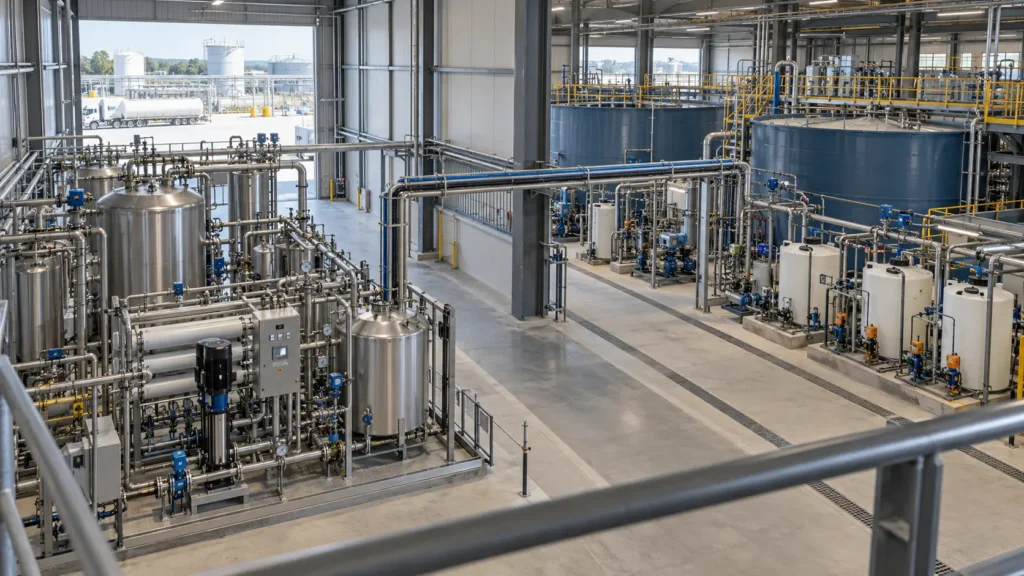
Prioritize internal and avoided-cost value before bulk sales, specialty recovery and bundled environmental claims.
Controlled principleThe hierarchy ranks value routes by the number and fragility of the claims needed to realize value. It does not claim that every Tier 1 route is profitable or that every Tier 4 route is speculative. Lower tiers should be tested first because their value is generally anchored to known site costs, users and infrastructure. |
|---|
A hierarchy of dependency, not a hierarchy of commodity prices
Chapter 22 screened whether a candidate output is recoverable at all. Chapter 23 asks a different question: which credible value route should be pursued first? The answer should not begin with the commodity that has the highest quoted price. It should begin with the route whose technical use, receiver, legal status, logistics and net value require the fewest unproven assumptions.
The hierarchy therefore starts with internal reuse and avoided purchase or disposal. It then moves to bulk minerals, where established uses may exist but freight, grade and market absorption dominate. Specialty products can support higher unit values, but generally require tighter selectivity, purification, qualification and supply-chain evidence. Integrated environmental products add another layer: the material must perform as a product and the claimed environmental service must be independently credible.
The hierarchy is a project-development sequence, not a permanent product label. The same chemical can occupy different tiers at different sites. Sodium chloride reused in an existing on-site process can be Tier 1; the same salt sold into a local bulk market can be Tier 2; a high-purity specialty grade can be Tier 3. Context controls the tier.
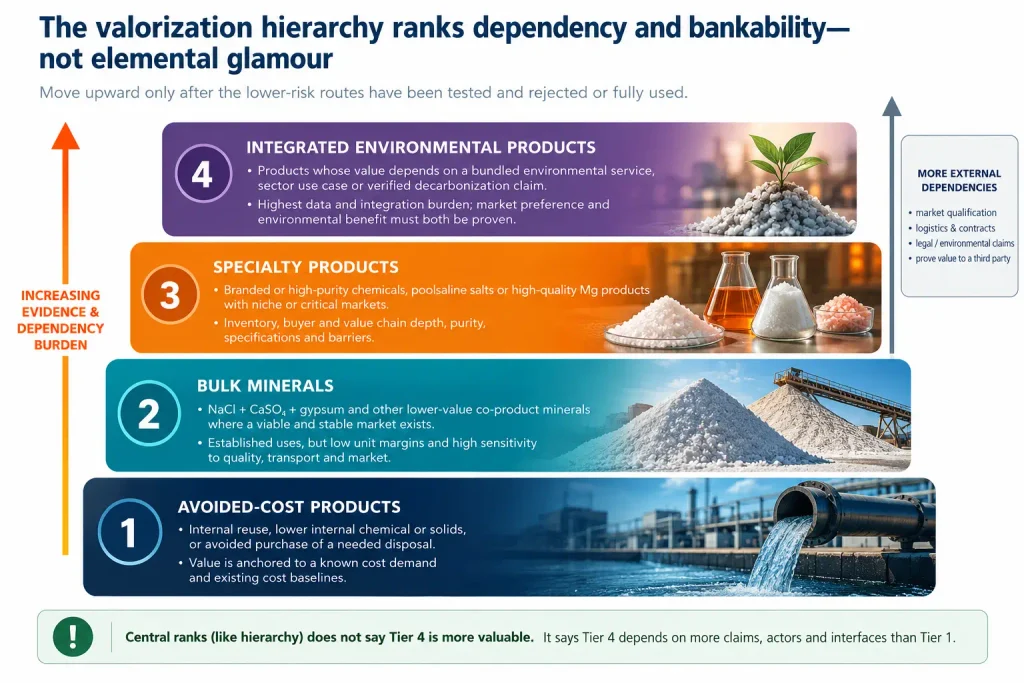
Figure 23.1. Required risk/value ladder. Higher tiers require more external dependencies and claims; they are not guaranteed to deliver higher net value.
| Tier | Value mechanism | Typical candidate form | Primary advantage | Dominant dependency | Downside if value case fails | Default priority |
|---|---|---|---|---|---|---|
| 1. Avoided-cost products | Avoided purchase, water production, disposal, transport or treatment cost within a known site boundary. | Fit-for-purpose water, internal brine/chemical, process salt, reusable precipitate or treatment input. | Known user, specification and cost baseline; minimal external logistics. | Internal process compatibility, reliability, permit and operating ownership. | Return to ordinary water/residual management without external sales revenue. | Test first. |
| 2. Bulk minerals | Sale or local substitution of established large-volume material. | NaCl, CaCO₃, gypsum and other bulk salts/minerals where grade fits. | Established applications and conventional handling may exist. | Low unit margin, high tonnage, quality consistency, freight and buyer absorption. | Unsold or rejected tonnes become disposal inventory. | Pursue where a local outlet and delivered netback are credible. |
| 3. Specialty products | Higher-value sale or strategic use of a selectively recovered compound. | Bromine, lithium, potassium salts, high-purity Mg products, acids/bases, critical minerals. | Potentially stronger unit value and strategic demand. | Selectivity, purification, maturity, registration, tight specifications and concentrated buyer risk. | High-cost product train can become a high-liability waste train. | Pursue selectively after Tier 1/2 routes and product qualification. |
| 4. Integrated environmental products | Product value bundled with verified circular, climate, treatment or environmental service. | Mineralized-carbon materials, treatment media, environmental construction products or integrated circular solutions. | May combine product revenue, avoided disposal and environmental benefit. | Life-cycle evidence, additionality, legal claims, multiple partners and long-term performance. | Environmental claim or product acceptance fails while the physical output remains. | Advance only with independent environmental and product evidence. |
Table 23.1. Four-tier valorization hierarchy. The tiers rank dependency and evidence burden rather than theoretical elemental value.
Tier 1 — avoided-cost products and internal value
Tier 1 captures value inside the site or an integrated industrial system. The output displaces an existing purchase, water-production duty, waste-management cost or operational constraint. Examples include fit-for-purpose recovered water, an acid or alkali used on site, a process salt returned to a compatible operation, or a precipitate that replaces a purchased treatment reagent.
EPA’s current industrial-reuse resources note that water generated by on-site processes can be reused elsewhere within a facility and, because some industrial applications have limited human contact, treatment can be less costly and less energy intensive than for higher-quality uses. That supports a fit-for-purpose approach; it does not establish that any recovered brine water is automatically reusable. [1]
Internal value is often more bankable because the user, specification, demand profile and avoided cost can be observed directly. It also avoids some external packaging, transport and market risk. However, internal reuse still needs a named owner, process acceptance, quality control, storage, reliability and a fallback route. A theoretical internal use that no operating department will accept is not Tier 1 evidence.
| Tier 1 route | Value basis | Required specification | Evidence | Hidden cost / risk | Stop condition |
|---|---|---|---|---|---|
| Recovered water reuse | Avoided raw-water purchase, treatment, pumping, discharge or production curtailment. | Fit-for-purpose chemistry, microbiology and reliability at point of use. | User-approved basis, storage/backup and trial under normal/upset operation. | Polishing, distribution, corrosion, storage and production interruption. | Reuse quality or availability cannot be maintained at lower total burden. |
| Internal acid / alkali | Avoided chemical purchase and possibly avoided brine disposal. | Concentration, impurity, materials and dosing compatibility. | Process trial, mass balance, impurity accumulation and safety review. | Dilution/concentration, storage, contamination and BPED/electrode residuals. | The internal process needs higher purity or different concentration than the recovery route can provide. |
| Internal salt / brine | Avoided salt purchase or regeneration chemical. | Ionic composition, contaminants, concentration and batch consistency. | Cycle testing, recycle accumulation model and user acceptance. | Impurity build-up, corrosion, product contamination and purge. | The recycle transfers contaminants into a more sensitive process. |
| Internal mineral / treatment input | Avoided reagent or virgin mineral purchase. | Reactive performance, phase, particle size, impurities and handling. | Functional test in the consuming process plus residual route. | Lower activity, extra moisture, storage and inconsistent solids. | The material performs worse than the displaced product or creates a new residual. |
| Avoided disposal service | Reduced mass/volume or improved receiver classification without merchant sale. | Receiver-specific physical and chemical acceptance. | Written receiver basis and full incremental cost. | Stabilization, dewatering, transport and lifecycle liability. | The intervention costs more than the disposal burden it avoids. |
Table 23.2. Tier 1 screening: internal value still requires a named use, specification, owner and fallback.
Tier 2 — bulk minerals are logistics businesses as much as separation businesses
Tier 2 covers established large-volume materials whose applications and broad specifications are understood. In brine projects these may include sodium chloride, calcium carbonate, gypsum and other salts or mineral solids. The assignment is contextual: a material can move to Tier 1 when used internally or to Tier 3 when a high-purity grade is required.
Bulk does not mean easy. The project must produce stable tonnes, not merely a chemically plausible solid. Moisture, retained mother liquor, particle size, contaminants, caking, storage, packaging and receiver specifications determine whether the material is usable. Low unit margins make transport distance, payload, return logistics and rejected loads decisive.
USGS Mineral Commodity Summaries 2026 provides current, commodity-specific information on industry structure, trends, production, trade and supply for more than 90 minerals and materials. The implication for brine projects is that there is no generic “mineral market”: each candidate requires its own grade, geography, capacity and buyer analysis.
| Bulk-mineral field | Required evidence | Why it controls value | Downside case | Design response | No-credit rule |
|---|---|---|---|---|---|
| Local market absorption | Named receivers, annual demand, competing supply and seasonality. | Large brine plants can produce more material than a local market can absorb. | Only part of annual output is sold. | Cap production credit, find multiple outlets and retain full residual capacity. | No global-market share assumption substitutes for a local receiver. |
| Delivered form and grade | Specification, moisture, PSD, impurity and packaging/unloading. | Buyer purchases a usable material, not target-element mass. | Product needs further washing, drying or milling. | Price the full conditioning train and yield loss. | No saleable-tonne credit for wet or mixed solids outside specification. |
| Freight and payload | Distance, mode, density/moisture, backhaul and minimum shipment. | Transport can consume the margin of low-value material. | Fuel/freight rises or payload falls because of moisture. | Test distance and freight sensitivities; prioritize local use. | Do not use ex-works price as delivered netback. |
| Consistency and storage | Lot variability, hygroscopicity, caking and buffer inventory. | Stable delivery is part of commodity qualification. | Receiver outage creates stockpile and re-wetting. | Size storage for downtime and maintain disposal route. | Unsold inventory remains a liability, not deferred revenue. |
| Legal / beneficial use | Product, by-product or waste status and applicable use criteria. | A technically useful mineral may still require a waste/beneficial-use route. | Use is rejected by regulator or receiver. | Keep compliant alternative and do not rely on terminology alone. | No revenue until legal and receiver conditions are credible. |
Table 23.3. Tier 2 screening: bulk-mineral value is controlled by saleable form, local absorption and delivered logistics.
Tier 3 — specialty products exchange volume risk for selectivity and qualification risk
Tier 3 includes lower-volume or higher-purity products for which unit value may be stronger but product and market requirements are tighter. Candidate examples include bromine, lithium products, potassium salts, high-purity magnesium compounds, selected critical minerals and BPED-derived acids or alkalis. Chapter 24 will examine specific pathways; this chapter controls the order in which they deserve attention.
The DOE Adoption Readiness Level framework is useful here because it separates technical readiness from value proposition, market acceptance, resource maturity and license to operate. A separation can be technically impressive while demand, supply chain, regulation or user adoption remains immature.
NETL’s techno-economic guidance for rare-earth recovery similarly requires the complete supply chain and additional processing needed to produce individual high-purity products to be included in the commercial assessment. That principle transfers directly to brine-derived specialty products: an enriched intermediate is not the final product.
| Specialty-product dependency | Evidence needed | Typical failure | Commercial consequence | Mitigation | Gate owner |
|---|---|---|---|---|---|
| Selective capture | Real-matrix recovery and impurity rejection over cycles/campaigns. | High target recovery with co-extracted or co-precipitated impurities. | Purification cost and waste erase unit value. | Change mechanism, pretreat selectively or lower product grade. | Process / separation lead. |
| Purification and product form | Complete conversion, washing, polishing, drying and packaging yield. | Lab assay ignores scale-up loss and off-spec production. | Saleable tonnes are far below recovered tonnes. | Track yield by step and price rejected material. | Product engineering. |
| Qualification / registration | Buyer protocol, standards, regulatory or application-specific approvals. | Product meets a chemistry number but fails user performance or documentation. | Long delay, restricted markets or no sales. | Engage buyer early and budget qualification campaigns. | Commercial + regulatory. |
| Market concentration | Named buyers, demand, substitutes and contract structure. | One buyer controls the entire revenue case. | Outage or negotiation change strands production. | Secondary outlet, modular production and residual capacity. | Commercial owner. |
| Technology and resource maturity | Module life, reagent/media supply, solvent loss, skilled operation and warranties. | Lab/pilot process cannot sustain uptime or supply chain. | Replacement and downtime dominate economics. | Stage-gate pilot, supplier evidence and downside availability. | Technology + operations. |
Table 23.4. Tier 3 screening: specialty products require adoption evidence beyond laboratory separation.
Tier 4 — integrated environmental products require two proofs
Tier 4 covers products whose value proposition is inseparable from an environmental service or circular-system claim. Examples may include mineralized-carbon construction materials, secondary treatment media, products that substitute a virgin material while avoiding a residual, or integrated solutions that combine water recovery, waste reduction and verified environmental performance.
These routes require two independent proofs. First, the material must provide a functional benefit, meet the relevant product specification and remain protective of health and the environment. EPA uses those elements in its methodology for beneficial use of industrial non-hazardous secondary materials. Second, the environmental claim itself must be demonstrated on a defined life-cycle and counterfactual basis; a circular label or avoided-landfill statement is not enough.
DOE’s carbon-mineralization pathway illustrates both the opportunity and the burden: alkaline reactants can be converted with CO₂ into aggregates, bicarbonates and building materials, but costs, reaction control, integration and market barriers still have to be overcome. Tier 4 is therefore not “better than” Tier 3. It is more integrated and claim-dependent.
| Tier 4 claim | Product proof | Environmental proof | Counterfactual | New dependency | Stop condition |
|---|---|---|---|---|---|
| Virgin-material substitution | Functional performance, specification and consistency in the end use. | Human-health/environmental evaluation and lawful beneficial-use route. | What virgin material and disposal route are actually displaced? | End user, regulator, long-term performance and product liability. | The material is only diluted into a product without genuine function or protection. |
| Carbon-mineralized product | Carbonate phase, product performance, storage stability and manufacturing control. | Net captured/stored CO₂ with energy, reagents, transport and baseline included. | Would the product and CO₂ handling occur without the project? | CO₂ source/capture, curing/integration, verification and market acceptance. | Gross mineralized CO₂ is claimed while lifecycle emissions or leakage negate benefit. |
| Environmental treatment media | Capacity, selectivity, hydraulic/physical performance and regeneration/disposal. | Demonstrated reduction in environmental burden over the media lifecycle. | Compared with existing treatment media and waste route. | User operation, monitoring, spent-media management and liability. | The media transfers contamination or creates a harder residual. |
| Bundled circular solution | Each water, chemical, mineral and service output meets its own gate. | System-level life-cycle benefit without double counting. | Credible baseline for water, waste, energy and product supply. | Multiple contracts, allocation rules, claims assurance and correlated failure. | Project economics or environmental benefit only exists through double-counted credits. |
Table 23.5. Tier 4 screening: both product performance and environmental benefit must be independently defensible.
Environmental-claim ruleAn environmental attribute does not repair a weak product. Count avoided disposal, virgin-material substitution, carbon storage or other benefits only after the physical product, legal route, counterfactual, system boundary and verification method are defined. |
|---|
The same material can occupy different tiers
The hierarchy is assigned to the value route, not to the chemical formula. Product form, user, geography, quality and legal status can move a candidate up or down the ladder. This prevents category errors such as treating all sodium chloride as a low-risk bulk product or all lithium-containing streams as attractive specialty opportunities.
| Candidate output | Tier 1 route | Tier 2 route | Tier 3 route | Tier 4 route |
|---|---|---|---|---|
| Recovered water | On-site cooling, washing or process reuse with avoided purchase/discharge. | External industrial water supply where a local network and contract exist. | High-purity or application-specific water requiring advanced qualification. | Water service bundled with verified ecosystem, resilience or circular-industrial benefit. |
| NaCl-rich output | Internal regeneration or process-brine use. | Local bulk industrial or deicing salt if grade and logistics fit. | High-purity food/chemical/pharma or specialty crystal grade. | Salt incorporated into an environmental product only where functional benefit and lifecycle case are proven. |
| Calcium carbonate / gypsum | Internal neutralization, seed, filler or treatment reagent. | Bulk filler, cement/wallboard/agricultural use where accepted. | Controlled particle/morphology or high-purity grade. | Carbon-mineralized or secondary-material product with verified environmental performance. |
| Mg-rich product | Internal precipitation reagent or process input. | Bulk Mg(OH)₂/MgO where local specifications and tonnage fit. | High-purity flame retardant, pharmaceutical, battery or specialty chemical grade. | Environmental treatment media or carbon-mineralized material with verified lifecycle benefit. |
| Acid / alkali | Internal chemical displacement at fit-for-purpose concentration. | Local bulk chemical sale under conventional specification and logistics. | High-purity or application-specific grade. | Closed-loop chemical service with verified net resource/environmental benefit. |
Table 23.6. Tier is determined by the value route and evidence burden, not by chemical identity alone.
Why internal value can retain more net value than merchant sales
Internal reuse can have a lower headline value than an external product and still produce the stronger project. The reason is not that internal routes are free; it is that they can remove packaging, freight, buyer qualification, sales rejection and market-absorption dependencies while adding avoided-disposal or operational value.
Figure 23.2 uses normalized assumptions to make that logic visible. It is not a price benchmark. The merchant route begins with higher gross value but loses most of it through purification, off-spec production, qualification, packaging and logistics. The internal route begins with lower avoided-purchase value but retains more after a smaller set of incremental costs.
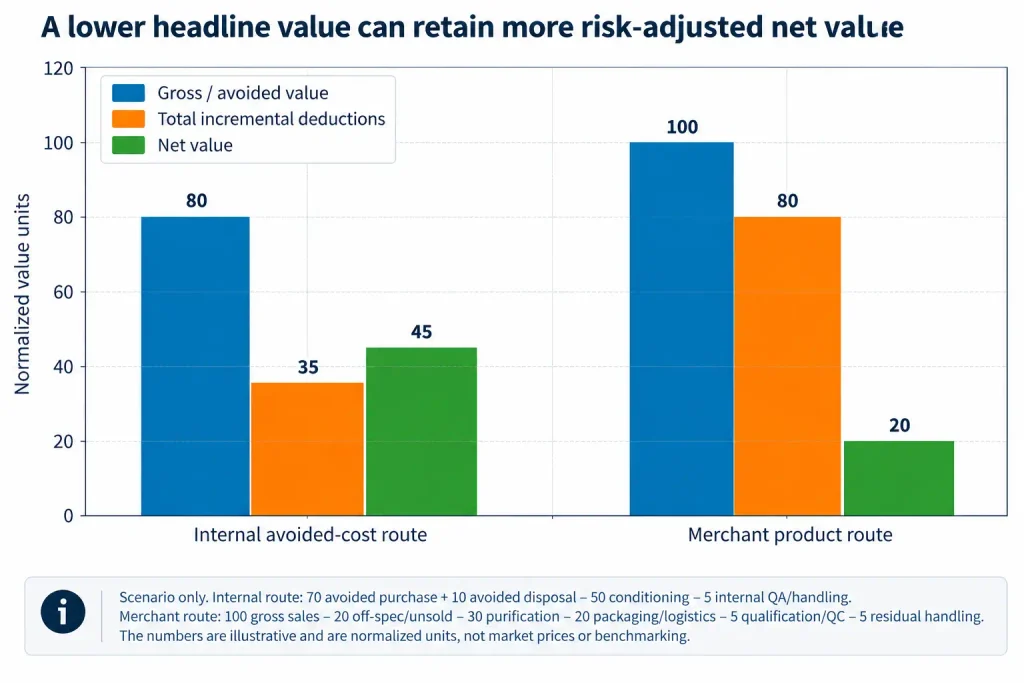
Figure 23.2. Scenario-only normalized net-value comparison. The assumptions are visible and must not be treated as market data.
| Scenario component | Internal avoided-cost route | Merchant product route | Interpretation |
|---|---|---|---|
| Positive value | 70 avoided purchase + 10 avoided disposal. | 100 gross sales value. | Headline merchant value is higher. |
| Purification / conditioning | −30. | −30. | Both routes require product-specific conditioning. |
| Qualification / QA / handling | −5. | −5. | Both require quality control; merchant qualification is usually more externally dependent. |
| Off-spec / unsold production | Included in internal operating allowance. | −20. | External sales require an explicit on-spec and absorption fraction. |
| Packaging / logistics | Assumed negligible beyond internal handling. | −20. | Distance and delivered form can dominate bulk-product economics. |
| Residual handling | Included in conditioning basis. | −5. | Off-spec and purification residuals remain inside the project boundary. |
| Illustrative net | 45 normalized units. | 20 normalized units. | A lower gross value can produce higher retained value and lower dependency risk. |
Table 23.7. Visible assumptions behind Figure 23.2; values are normalized scenario inputs only.
Multi-product recovery is a portfolio, not free additional revenue
A multi-product train can improve economics by sharing pretreatment, concentration and infrastructure, but it can also create correlated impurity, market and operability risks. Each product changes the chemistry available to the next product. Each separation produces new mother liquor, reagent load, wash stream, off-spec inventory and downtime interaction.
The 2026 brine-valorisation review reports that large-scale industrial examples remain concentrated on water and sodium chloride, while multi-resource recovery is still largely limited to pilot implementations. That evidence does not rule out multi-product systems; it means the project should not assign full portfolio revenue before integrated scale, product quality and market evidence exist.
The base water and residual-management project should therefore survive a no-product-revenue case. Each additional product must improve the downside result after its marginal capital, operating complexity, availability penalty, product loss and residual route are included.
| Portfolio issue | Required analysis | Common overstatement | Downside test | Decision rule | Record |
|---|---|---|---|---|---|
| Shared feed inventory | Element/ion balance through sequential products and purge. | Each product is calculated from the original feed as if the others remove nothing. | Recalculate downstream inventory after upstream recovery and losses. | No double counting of target or reagent-derived mass. | Integrated mass balance. |
| Shared CAPEX/OPEX | Allocation based on causal use and incremental system effects. | Common units are treated as sunk for every product. | Remove one product and recalculate total project cost/availability. | A product must improve the complete project, not only its own spreadsheet. | Incremental case register. |
| Mother liquor / impurities | Accumulation, recycle, phase behaviour and controlled purge. | All target products are recovered while impurities disappear. | One product or buyer is unavailable; impurity inventory continues. | Keep explicit purge and off-spec route. | Reaction and residual ledger. |
| Market absorption | Demand and contract for each product plus correlated geography. | Every tonne from every product is sold at current price. | One or more markets fall to zero revenue. | No-product and partial-product scenarios are mandatory. | Commercial portfolio model. |
| Availability and campaigns | Integrated scheduling, cleanout, changeover, storage and receiver outages. | Unit availability values are multiplied without system interactions. | Most fragile block limits whole-train operation. | Use system availability and decoupling inventory. | Operational block model. |
| Environmental credits | System boundary, allocation and no double counting. | Water, waste, carbon and product benefits are all claimed against the same baseline. | Remove the environmental credit and retest economics. | Credit is upside unless verified and contractible. | LCA/claims register. |
Table 23.8. Multi-product portfolio controls: each additional product must earn its place in the integrated downside case.
The hierarchy screen and value-route register
The register below translates the hierarchy into a project-development tool. It should contain only candidates that have passed, or remain explicitly conditional against, Chapter 22’s six recoverability conditions. The route is assigned to the lowest credible tier first; a higher-tier case may be retained as upside but should not displace the lower-risk baseline without evidence.
| Candidate output | Lowest credible tier | Named value mechanism | User / buyer | Specification + legal route | Reliable volume | Netback + downside | Residual fallback | Gate status |
|---|---|---|---|---|---|---|---|---|
| Candidate A | Tier 1/2/3/4 | Avoided purchase/disposal, sale or bundled environmental service. | Named internal unit or external receiver. | Required form, qualification and jurisdiction. | On-spec normal/design/upset quantity. | Incremental net value; no-revenue case. | Storage, treatment or disposal route. | Proceed / conditional / stop. |
| Candidate B | Same fields. | Same fields. | Same fields. | Same fields. | Same fields. | Same fields. | Same fields. | Same fields. |
| Candidate C | Same fields. | Same fields. | Same fields. | Same fields. | Same fields. | Same fields. | Same fields. | Same fields. |
Table 23.9. Valorization hierarchy register for selecting the lowest-risk credible value route.
Acceptance gate — when should a route move up the hierarchy?
A candidate should move to a higher tier only when the lower-tier opportunity is unavailable, saturated or demonstrably inferior, and when the added dependencies are matched by stronger evidence and risk-adjusted value. Weighted scoring cannot compensate for an absent user, legal route, product specification or residual fallback.
| Gate field | Proceed at current tier | Advance to higher tier | Recycle / conditional | Stop |
|---|---|---|---|---|
| Lower-tier use | Named internal or local value route is technically and economically credible. | Lower-tier demand is absent/saturated or higher tier is demonstrably superior after full cost/risk. | User acceptance or capacity remains unresolved. | No credible use at any tier. |
| Product / environmental evidence | Specification, legal status and benefit mechanism are proven for the tier. | Higher-tier claims have independent evidence and owner. | One claim relies on future qualification or regulation. | Material cannot meet functional or protective requirements. |
| Logistics / receiver | Routine and backup route match actual volume and form. | Higher-tier route has contracted/credible logistics and absorption. | Single buyer or fragile transport remains. | No route for off-spec or unsold production. |
| Incremental economics | Current tier remains positive under conservative downside. | Higher tier improves the complete downside case, not only base revenue. | Value depends on limited conditional credit. | Requires headline prices, full sales or double-counted benefit. |
| System operability | Product block does not compromise water plant, residual closure or availability. | Added complexity is decoupled and demonstrated. | Integrated pilot/availability evidence incomplete. | Product train creates unacceptable reliability or residual risk. |
Table 23.10. Valorization hierarchy acceptance gate.
Priority ruleTest Tier 1 first, then Tier 2, Tier 3 and Tier 4. A higher tier is not an achievement by itself. It is justified only when the lower-risk route is unavailable or inferior and the added qualification, market, logistics, legal and environmental dependencies are demonstrably rewarded. |
|---|
Handover to Chapter 24 — product-specific pathways
Chapter 24 develops concise product profiles for water, calcium carbonate, gypsum, magnesium products, sodium chloride, sodium sulfate, potassium salts, bromine, BPED acids/alkalis, lithium and selected critical minerals. The hierarchy determines which profiles deserve project attention first; it does not pre-select the technology.
For every candidate carried forward, Chapter 24 should receive the source concentration and annual recoverable inventory; complete chemistry and competing impurities; product form and specification; demonstrated separation and purification route; maturity and scale; internal use or qualified buyer; legal status; packaging and logistics; waste and mother-liquor route; and the lowest credible tier with the associated downside case.
Chapter conclusion
Valorization should proceed from the most certain value mechanism to the most dependent. Tier 1 captures avoided purchase, water-production, transport or disposal cost through a known internal use. Tier 2 addresses bulk minerals whose value depends on stable tonnes, grade and local logistics. Tier 3 covers specialty products that demand stronger selectivity, purification, qualification and market evidence. Tier 4 bundles product performance with a verified environmental service and therefore carries the highest claim and integration burden.
Internal value is often more bankable than merchant sales because the user, specification and avoided cost are already inside the project boundary. Merchant products may offer higher gross value, but packaging, freight, rejection, qualification and buyer risk can erode the netback. The same material may occupy different tiers depending on site and use.
The correct portfolio is not the longest list of recoverable elements. It is the shortest set of value routes that improves the complete water, residual and business case under conservative assumptions. Chapter 24 now examines the product-specific chemistry and process evidence behind that shortlist.
Chapter 23 in one sentencePrioritize internal reuse and avoided cost first; pursue bulk, specialty and integrated environmental products only as their added dependencies are matched by stronger evidence and risk-adjusted net value. |
|---|