
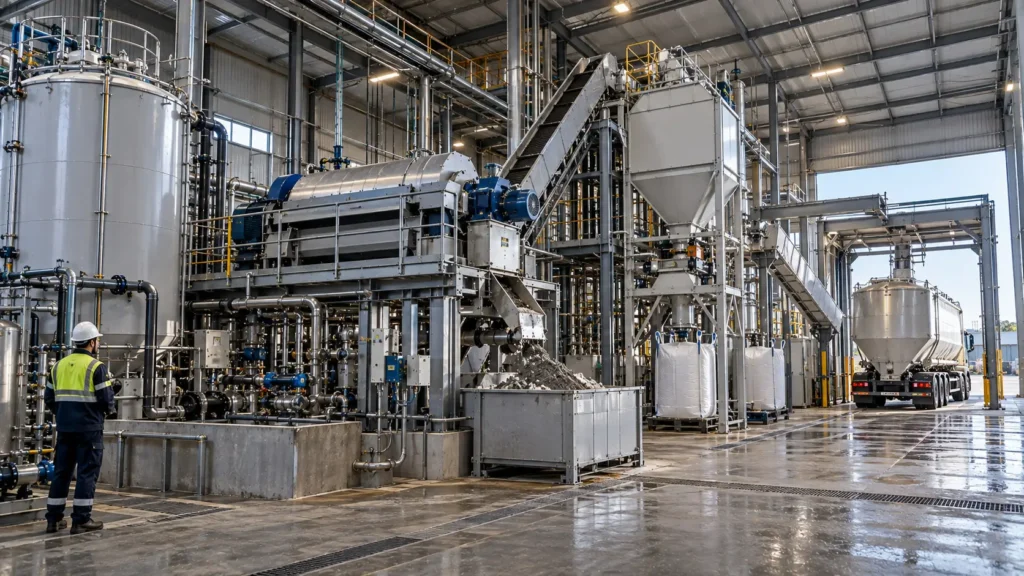
Close the ZLD boundary through dewatering, qualification, storage, transport, receiver acceptance and lifecycle responsibility.
Controlled principleA residual is not closed when it merely leaves the process diagram. Its dry and wet mass, retained liquid, composition, physical behaviour, legal status, storage, packaging, transport, receiver acceptance, contingency and long-term liability must all be explicit. |
|---|
20.1 The solids boundary begins before the solids leave the process
Chapter 19 converted the final supersaturation into controlled crystals, mixed salts, wet sludge or another solid residual. Chapter 20 determines whether those outputs can actually be thickened, separated, washed, dried, stored, transported and accepted. The process boundary therefore includes all liquids and fines that remain attached to the solid or are created while conditioning it.
A solid can be dry by appearance and still carry substantial mother liquor, dissolved impurities or free liquid that separates during storage or transport. A dewatered cake can meet a mechanical handling objective while failing a product specification, a landfill acceptance test or a hazardous-waste classification. Conversely, a lower-moisture commercial crystal can be rejected because of caking, dust, inconsistent phase, contamination or packaging failure.
The design basis must preserve the output classification established in Chapter 19. Washing and drying can improve physical quality and remove accessible surface liquor; they cannot transform a mixed disposal salt into a commercial product without specification, consistency, legal status and a qualified user or buyer.
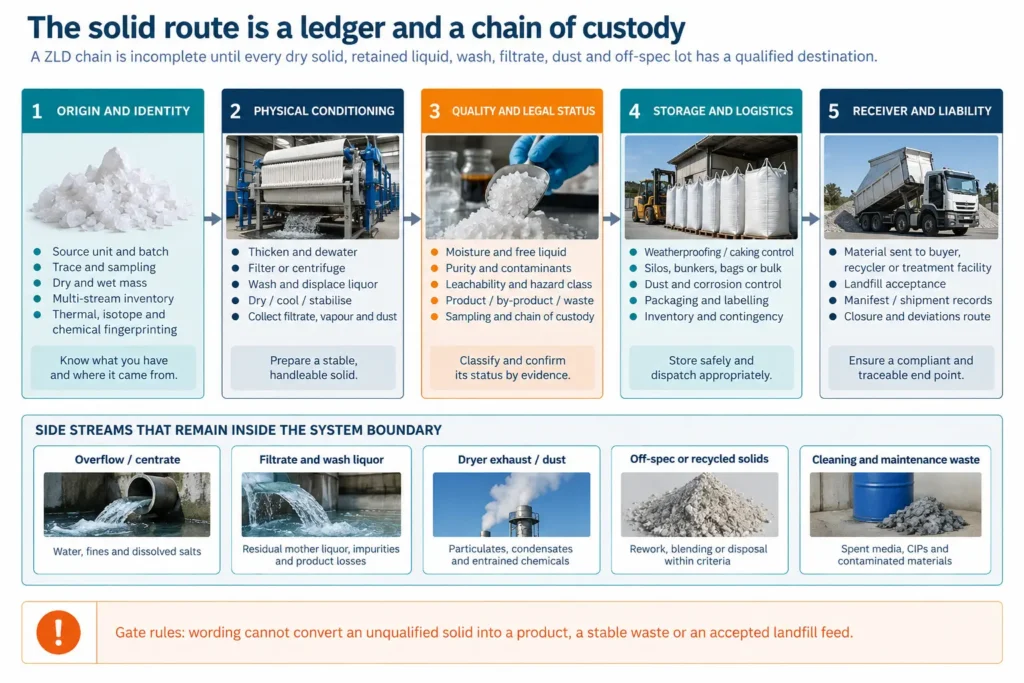
Figure 20.1. The solid route is both a residual ledger and a chain of custody.
20.2 Name the residual and its management objective
Equipment selection starts with the physical and commercial identity of the residual. A pumpable hydroxide sludge, free-draining sodium-chloride crystal, fine mixed salt, oily precipitate and hygroscopic mother-liquor cake do not share the same separation or storage behaviour. The management objective also differs: recover a product, reduce transport water, meet a receiver’s no-free-liquid rule, improve leachability, create a stable stackable material or preserve a recycle stream.
| Residual class | Minimum identity | Primary objective | Likely next operations | Critical downside |
|---|---|---|---|---|
| Commercial crystal candidate | Phase, PSD, purity, mother-liquor retention, moisture and specification. | Protect yield and product quality. | Classify, centrifuge/filter, wash, dry, cool, package and qualify. | Product rejection converts inventory to a waste with a different route and value. |
| Mixed disposal salt | Major/minor phases, soluble impurities, moisture, leachability and free liquid. | Create a stable, acceptable disposal form at minimum total burden. | Dewater, dry or stabilize only as required by transport and receiver. | Energy-intensive polishing creates no value if acceptance remains unchanged. |
| Chemical precipitation sludge | Target phase, co-precipitates, seed, polymer, wash salts and hazardous constituents. | Recover water and reduce wet volume while controlling contaminant mobility. | Thicken, filter/centrifuge, wash if justified, stabilize and dispose/reuse. | Gel-like or fine solids retain large water volumes and blind equipment. |
| Mother-liquor-rich cake | Cake solids, retained liquor composition, free-liquid tendency and hygroscopicity. | Separate or immobilize the highest-liability liquid fraction. | Rewash, repress, centrifuge, dry, blend or stabilize. | Re-wetting, salt creep, corrosion and liquid release during storage. |
| Off-spec product / purge salt | Reason for rejection, recoverable fraction, contaminants and batch traceability. | Rework, blend, redirect or dispose without contaminating good product. | Quarantine, resample, dissolve/reprocess, controlled blending or disposal. | Uncontrolled blending destroys traceability and can spread contamination. |
| Spent media / contaminated packaging | Media, adsorbed load, residual chemical, moisture and regulatory status. | Prevent secondary release and close replacement waste. | Drain, containerize, regenerate, return to supplier or dispose. | Residuals omitted from ZLD because they are periodic rather than continuous. |
Table 20.1. Residual identity and management objective must be fixed before dewatering equipment is selected.
20.3 Thickening controls inventory; it does not create a final solid
Thickening uses gravity and particle aggregation to increase underflow solids concentration and recover an overflow liquor. Metso’s current thickener guidance identifies particle size, shape, surface chemistry and density as key variables and distinguishes hydraulic rise rate from solids loading. Those principles are relevant to mineral and precipitation slurries, but project sizing still requires representative settling and rheology tests.
The thickener is also a chemical inventory. Bed depth, solids residence time, flocculant dose, rake torque, underflow withdrawal and overflow quality must remain controllable as feed mineralogy, crystal size and batch chemistry change. Long residence time may improve clarification while allowing crystal ageing, agglomeration, redissolution, hydration or biological change.
A high-density underflow can reduce downstream filter area and tankage, but it can also become non-pumpable or trap mother liquor. The target should therefore be stated as a complete envelope: underflow density or rheology, overflow solids and dissolved chemistry, inventory, response to interruptions and downstream feedability.
| Thickening field | Required test / data | Control variable | Output to close | Failure mode |
|---|---|---|---|---|
| Settling and clarification | Representative settling curves, hindered-settling behaviour and overflow solids. | Rise rate, flocculant, dilution and feedwell mixing. | Overflow water/impurities and fines loss. | Pin floc, density current, short circuiting or fines carryover. |
| Underflow concentration | Solids content, yield stress, viscosity and pumpability across residence time. | Bed inventory, rake torque and withdrawal rate. | Dry solids, retained liquor and downstream hydraulic load. | Non-pumpable paste, rat-holing or uncontrolled dilution. |
| Particle and phase stability | PSD, mineralogy, temperature and ageing tests. | Residence time, temperature and recycle. | Crystal growth/breakage, hydration or redissolution. | Material arriving at the filter differs from the test sample. |
| Upset and shutdown | Maximum no-withdrawal period, restart protocol and displaced inventory. | Storage, recirculation, bypass and emergency withdrawal. | Off-spec underflow and tank clean-out waste. | Settled bed cannot be restarted or overflows during downstream outage. |
Table 20.2. Thickening is an inventory-control and feed-conditioning operation.
20.4 Mechanical dewatering: match the device to the solids
Mechanical dewatering removes interstitial liquid and produces a cake or crystal discharge. EPA’s technology fact sheets describe recessed-plate filter presses, belt filter presses and centrifuges as distinct mechanisms with different operating patterns. Recessed-plate presses operate in cycles and can produce comparatively high cake-solids concentrations; belt presses are continuous and depend strongly on conditioning and drainage; centrifuges use rotational force and provide enclosed continuous separation. These sources concern wastewater residuals and should be used as mechanism guidance rather than brine-specific performance guarantees.
Crystalline solids can also use filter centrifuges, pusher or screen-bowl machines. ANDRITZ describes screen-bowl decanters as combining sedimentation and a final screening section, with optional in-situ washing for free-draining crystalline or granular solids. The applicability depends on particle size, breakage, abrasion, liquor viscosity and wash objective.
The selection must close both cake and liquid quality. A device that maximizes dryness may break a product crystal, increase fines, consume excessive wash water, damage filter cloths or transfer valuable solids to the centrate. A lower-moisture cake is not automatically the lowest-cost result if energy, batch time, maintenance and product loss rise faster than transport savings.
| Device | Best fit | Operating mode | Primary controls | New residuals | Main limitation |
|---|---|---|---|---|---|
| Recessed-plate / membrane filter press | Fine or compressible sludge where high cake solids and clear filtrate justify batch operation. | Batch fill, press, optional squeeze/wash/air blow, discharge and cloth wash. | Pressure, cycle time, conditioning, cloth, cake thickness and discharge. | Filtrate, wash liquor, cloth wash, drips and off-spec cake. | Cycle bottleneck, cloth blinding, labour/automation and variable cake release. |
| Belt filter press | Conditionable sludge with reliable gravity drainage and continuous duty. | Continuous gravity drainage followed by progressive pressure. | Polymer, belt speed/tension, wash and feed distribution. | Filtrate, belt wash and polymer-bearing cake. | Lower containment, odour/aerosol, wash-water demand and weak response to feed change. |
| Decanter centrifuge | Continuous slurries where compact footprint, containment and automated control matter. | Continuous sedimentation and scroll discharge. | Bowl speed, differential speed, pond depth, torque, feed rate and polymer. | Centrate, fine-solids loss, flush/CIP and worn components. | Power, abrasion, shear, fine-particle capture and centrate quality. |
| Filter / screen centrifuge | Free-draining crystals or granular solids requiring high throughput and possible washing. | Continuous or batch filtration under centrifugal force. | G-force, screen, feed distribution, residence time and wash. | Mother liquor, wash liquor, fines and crystal breakage. | Not suitable for highly compressible gels or very fine non-draining solids. |
| Vacuum / pressure belt filter | Continuous crystals or mineral precipitates that form a permeable cake. | Continuous filtration with optional multi-stage washing. | Vacuum/pressure, cake formation, wash ratio and cloth movement. | Filtrate fractions, wash, vapour and cloth cleaning. | Large footprint, vapour containment, cake cracking and fine-solids breakthrough. |
Table 20.3. Mechanical dewatering options must be compared by solids behaviour, liquid quality and complete cycle burden.
20.5 Crystal washing and drying are product-quality operations
Crystal washing displaces accessible mother liquor from the particle surface and cake voids. It can reduce soluble impurities but also dissolves product, changes yield, creates a wash-liquor recycle and can trigger phase transformation. The wash medium, temperature, contact pattern, ratio and residence time should be selected from solubility and product-specification data rather than from a generic water-wash assumption.
Drying removes surface and, where relevant, bound moisture. GEA describes fluid-bed drying as controlled removal of surface and bound moisture from crystalline or granular solids through intense gas–particle heat and mass transfer. The dryer must also close cooling, exhaust gas, fines capture, condensate, dust return, off-spec start-up material and the risk of crystal hydration, dehydration or thermal decomposition.
For a disposal salt, washing or drying should stop when the receiver and handling objective is met. For a commercial crystal, the output specification should include phase, size distribution, moisture, retained mother liquor, soluble and insoluble impurities, caking behaviour, dust, temperature and packaging performance.
| Quality operation | Required basis | Benefit to prove | Loss / residual to quantify | Failure mode |
|---|---|---|---|---|
| Cake / crystal washing | Mother-liquor composition, product solubility, wash medium, temperature and flow pattern. | Accessible impurity displacement to the required specification. | Dissolved product, wash liquor, fines and additional drying duty. | Channelling, cake cracking, phase change or yield loss without purity gain. |
| Centrifugal displacement wash | Crystal drainage, screen retention, residence time and wash distribution. | High-intensity liquor removal in compact equipment. | Wash/mother-liquor mixture and crystal breakage. | Fine crystals pass the screen or wash bypasses the cake. |
| Thermal drying | Initial/final moisture, drying kinetics, product stability, gas and dust behaviour. | Storage, packaging or product moisture requirement. | Exhaust moisture, heat, dust/fines and start-up/off-spec material. | Overdrying, hydration change, attrition, dust explosion where applicable or corrosion. |
| Cooling and conditioning | Discharge temperature, ambient humidity, caking and packaging permeability. | Prevent condensation, moisture uptake and agglomeration. | Cooling air, dust and rejected hot product. | Warm salt packed into cool humid air condenses and cakes. |
Table 20.4. Washing and drying must be justified by a receiver or product requirement.
20.6 Moisture is a transport, storage and liability multiplier
Cake solids should always be reported on a mass basis with the sampling and drying method stated. One tonne of dry solids at 20 wt% cake solids requires handling five tonnes of wet cake; at 40 wt% it requires 2.5 tonnes. The difference is water that occupies storage, consumes transport capacity and can carry dissolved contaminants.
The calculation does not establish equipment performance. Real loads can be higher because of free liquid, wash solution, packaging, stabilization reagent, re-wetting and batch variability. It does, however, show why small improvements in cake solids at the wet end can materially change logistics and why a dry-solids claim is not enough for transport planning.
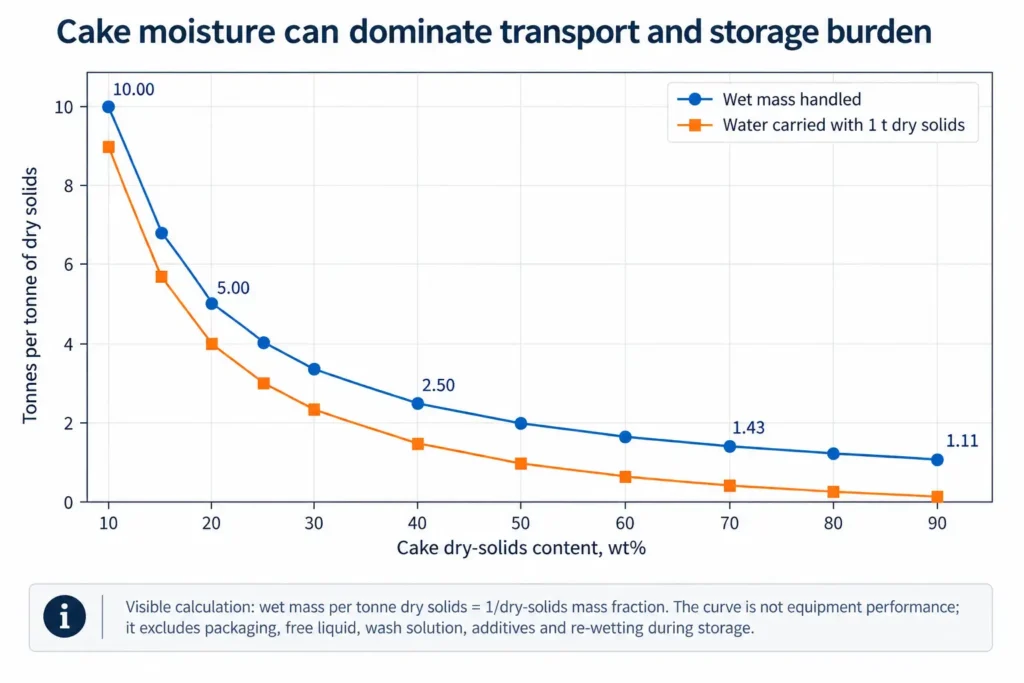
Figure 20.2. Visible mass calculation: cake moisture can dominate storage and transport burden.
20.7 Hygroscopicity, deliquescence and storage design
IUPAC defines hygroscopicity as the tendency of a substance to absorb water from the atmosphere. Deliquescence occurs when a solid collects enough water vapour to form a solution above a characteristic humidity condition. Mixed salts and impurities can behave differently from a pure phase, so a product or waste cannot be assigned a universal humidity limit from its principal salt alone.
Moisture uptake can cause caking, agglomeration, salt creep, silo wall build-up, corrosion, loss of flowability and liquid release. Repeated humidity and temperature cycles can be more damaging than a stable average condition. Storage qualification should therefore use the actual material, packaging, residence time and climate, including start-up, seasonal humidity, condensation and emergency outdoor exposure.
Bulk storage also requires inventory control. The silo, bunker or covered pad must accommodate normal production, receiver outages, off-spec quarantine and dewatering or dryer downtime. A nominal days-of-storage value is incomplete without bulk density, angle of repose, compaction, reclaim method and the fraction of capacity that is actually usable.
| Storage variable | Why it matters | Evidence / test | Design response | Downside route |
|---|---|---|---|---|
| Moisture sorption / deliquescence | Changes flowability, mass, corrosion and free-liquid tendency. | Dynamic vapour sorption or controlled-humidity storage on the real material. | Dry/cool product, humidity barrier, conditioned air and short residence. | Rework, redry, dissolve/reprocess or dispose. |
| Temperature and condensation | Warm product or cold surfaces create local liquid films. | Temperature profile, dew point, packaging and seasonal scenario. | Cool before packing, insulate, ventilate or dehumidify. | Quarantine wet/caked material and inspect corrosion. |
| Caking and arching | Blocks feeders and reduces usable silo capacity. | Shear, flow-function, compaction and residence-time tests. | Mass-flow geometry, live bottom, agitation or smaller batches. | Manual clean-out and confined-space / maintenance exposure. |
| Dust and fines | Loss, exposure, corrosion, housekeeping and product rejection. | Particle size, dustiness and process-hazard review. | Enclosure, local extraction, filtration and grounded handling where required. | Collected dust recycle only if chemistry and classification remain valid. |
| Bulk density and reclaim | Controls storage volume, truck payload and feeder selection. | Loose/tapped density, angle of repose and reclaim trial. | Silo/bunker geometry, weigh system and redundancy. | External temporary storage or reduced production. |
Table 20.5. Hygroscopic and bulk-handling behaviour must be qualified for the actual material and climate.
20.8 Representative sampling, free liquid, leachability and hazardous status
Waste classification must use a representative sample of the residual population, not one convenient scoop of dry surface material. EPA’s SW-846 sampling guidance defines representative sampling in relation to the whole waste and emphasizes preservation, quality assurance and documented sampling plans. Batch variability, stratification, fines segregation and mother-liquor drainage must be included in the plan.
In the U.S. RCRA context, Method 9095B is a method-defined test used to detect free liquids for specified landfill provisions, while Method 1311 TCLP evaluates the mobility of listed organic and inorganic analytes for the toxicity characteristic. EPA identifies ignitability, corrosivity, reactivity and toxicity as four separate hazardous-waste characteristics. Passing one test does not establish that the waste is non-hazardous, universally acceptable or stable over its lifecycle.
In the European Union, landfill acceptance uses basic characterisation, compliance testing and on-site verification for the relevant landfill class under Council Decision 2003/33/EC. The current consolidated Landfill Directive requires lifecycle measures to prevent or reduce impacts on water, soil, air and health. Local implementation, waste codes and receiver permits still control.
| Question | Evidence | What the result establishes | What it does not establish | Jurisdictional example | Design response |
|---|---|---|---|---|---|
| Is the sample representative? | Sampling plan, lot definition, increments, compositing, custody and variability. | The tested material represents the claimed waste population within stated confidence. | That future chemistry or off-spec events are represented. | EPA SW-846 sampling guidance. | Batch traceability and resampling triggers. |
| Does free liquid separate? | Specified free-liquid or liquid-release test on representative material. | Compliance with the particular method-defined criterion. | Hazard status, leachability or storage stability. | EPA Method 9095B for specified RCRA landfill provisions. | Improve dewatering, absorb/solidify only where lawful and justified, or choose another route. |
| Can contaminants leach? | Method, particle preparation, liquid/solid ratio, pH, analyte list and QC. | Leaching under the defined test scenario. | Universal field release or long-term performance in every landfill. | TCLP in U.S. toxicity-characteristic context; EU landfill acceptance methods. | Stabilize, change route, or obtain receiver-specific testing. |
| Is the waste hazardous? | Process knowledge, listed-waste review and all applicable characteristics. | Regulatory status within the jurisdiction and waste-generation context. | Product or by-product status in another jurisdiction. | RCRA listed/characteristic system; EU/national waste classification. | Segregate, label, store, transport and manifest accordingly. |
| Will the receiver accept it? | Written profile, permit limits, test package, packaging and frequency. | Conditional acceptance by the named facility. | Permanent acceptance after chemistry changes. | Landfill class and facility-specific waste acceptance. | Maintain alternate receiver and off-spec storage. |
Table 20.6. Free-liquid, leachability and hazard tests answer different questions and remain jurisdiction-specific.
Testing boundaryA test method is not a universal material property. Record the sampling population, preparation, extraction or loading conditions, analytes, detection limits, qualifiers and decision rule. A result may support one regulatory or receiver decision while remaining insufficient for product quality, long-term leaching or another jurisdiction. |
|---|
20.9 Stabilization and solidification are conditional controls
Stabilization reduces contaminant mobility or toxicity through chemical or physicochemical mechanisms. Solidification changes handling or physical form, often by binding or encapsulating the waste. EPA guidance treats them as related but distinct concepts and emphasizes waste-specific testing. Adding cementitious or sorptive material may remove free liquid and improve handling while increasing total mass, transport and landfill volume.
The treatment should therefore be selected against a named acceptance or risk objective: leachability, strength, liquid release, pH buffering, dust, permeability or handling. It should also be tested after curing, ageing, wet–dry exposure and any relevant chemical attack. A stable-looking monolith is not evidence of long-term contaminant immobilization.
| Control objective | Potential intervention | Mandatory balance | Verification | Risk if simplified |
|---|---|---|---|---|
| Eliminate free liquid / improve handling | Sorbent, binder or additional dewatering. | Added reagent, final wet/dry mass and released liquid. | Free-liquid method, strength/handling and storage test. | Large volume increase without improved acceptance. |
| Reduce contaminant mobility | pH control, precipitation, adsorption or cementitious stabilization. | Contaminant partition, reagent impurities and leachate. | Applicable leach tests plus ageing and chemical durability. | Initial pass followed by later release or pH drift. |
| Create structural waste form | Solidification / encapsulation. | Binder, water, voids, curing loss and final volume. | Strength, integrity, permeability and receiver specification. | Cracking, salt expansion, poor curing or incompatible brine salts. |
| Qualify beneficial use | Formulation to a defined material specification. | Product inputs, contaminants, consistency and off-spec fraction. | Technical specification, environmental/legal route and user trial. | Waste dilution or sham recycling presented as valorization. |
Table 20.7. Stabilization or solidification must improve a named acceptance or risk criterion.
20.10 Mother liquor, filtrate, wash liquor and purge remain process streams
Dewatering does not eliminate mother liquor; it redistributes it. Filtrate or centrate carries dissolved salts, fine solids and any product dissolved during washing. Recycling it can recover water or product, but it can also return the impurity that the solid separation was intended to reject.
The steady-state model should therefore identify every recycle destination and controlled purge. The project must show dissolved and suspended loads, tank inventory, start-up displacement, washing dilution, filter or centrifuge losses, dryer condensate and the effect of receiver outages. A closed loop without a quantified impurity purge is not a valid ZLD balance.
| Liquid side stream | Required composition / flow | Potential value | Accumulation risk | Required decision |
|---|---|---|---|---|
| Thickener overflow | Flow, TSS/fines, dissolved ions, polymer and variability. | Water reuse or return to crystallization. | Fine crystals, organics or limiting ions recycle. | Return, polish, segregate or purge. |
| Filter filtrate / centrate | Mother-liquor chemistry, fines, wash dilution and batch sequence. | Product recovery and reduced fresh wash water. | Impurity and reagent accumulation. | Separate first/last fractions where useful and set purge. |
| Crystal wash liquor | Wash medium, dissolved product, displaced impurities and temperature. | Counter-current wash or controlled recycle. | Product loss and dilution of crystallizer inventory. | Recovery versus purity optimum. |
| Dewatering / dryer cleaning | CIP recipe, dissolved deposit, solids and frequency. | Possible return during compatible campaign. | Batch shock, incompatible chemical and off-spec product. | Dedicated storage and conditional return. |
| Mother-liquor purge | Flow, density, full chemistry, toxicity and destination. | Recover another product only if qualified. | Unlimited impurity accumulation when undersized. | Fixed control objective, monitored flow and credible route. |
Table 20.8. Liquid streams created by solids handling must remain in the water and salt balances.
20.11 Packaging, transport and chain of custody
Packaging must be compatible with the material’s moisture, corrosivity, particle size, dust, temperature, load and expected storage period. A bag, lined bulk bag, drum, skip, covered truck or pneumatic tanker is an engineered interface, not merely a logistics choice. It must prevent loss, moisture ingress, liquid leakage, reaction and unsafe exposure while allowing the receiver to unload the material.
Where the material is classified as dangerous goods or hazardous waste, applicable transport rules control classification, packaging, marking, documentation and custody. The 2025 UN Model Regulations cover classification, packaging and consignment provisions and specifically clarify requirements for solid substances liable to become liquid during transport. In the U.S., hazardous waste transport uses the manifest system to track the waste from generator to receiving facility. The EU’s updated Waste Shipments Regulation strengthens traceability and environmentally sound management, with most provisions applying from May 2026.
| Logistics field | Required information | Packaging / handling question | Documentation | Contingency | Failure consequence |
|---|---|---|---|---|---|
| Physical state and moisture | Dry solids, free liquid, re-wetting, bulk density and temperature. | Will the material remain contained and unloadable for the full journey? | Lot/batch data and packaging specification. | Return, overpack, redry or alternate route. | Leakage, load shift, caking or rejected delivery. |
| Chemical compatibility | pH, salts, oxidants/reducers, organics, metals and corrosion. | Are liner, bag, drum, vehicle and seals compatible? | SDS/waste profile and compatibility record. | Compatible salvage package and spill response. | Packaging failure, reaction or contamination. |
| Hazard / waste classification | Applicable class, waste code, UN entry where relevant and receiver status. | Are marking, labels, placards and trained handlers required? | Manifest/shipping paper and approvals. | Qualified alternate carrier and receiver. | Illegal shipment, delay, fines or emergency response. |
| Load and route | Annual tonnes, batch frequency, payload, distance, border and weather. | Can production continue through transport disruption? | Weigh tickets, chain of custody and receipt. | On-site buffer and secondary route. | Plant shutdown or uncontrolled temporary storage. |
| Receiver interface | Unloading method, dust control, sampling, rejection procedure and hours. | Can the facility safely receive the actual product form? | Pre-acceptance and delivery acceptance. | Quarantine and return/re-routing protocol. | Contamination of receiver system or off-site stranded load. |
Table 20.9. Packaging and transport are part of the process boundary and continuity plan.
20.12 Landfill acceptance and long-term liability
Landfill is a named engineered receiver, not a generic endpoint. The waste must match the facility’s permit, landfill class, physical-state restrictions, testing protocol, packaging and operating limits. EU acceptance procedures explicitly require basic characterisation, compliance testing and on-site verification for the relevant class. U.S. hazardous-waste rules separately address characteristics, treatment standards and free liquids.
Acceptance today also does not erase lifecycle exposure. The current consolidated EU Landfill Directive frames controls over the whole lifecycle of the landfill. EPA’s RCRA system similarly places responsibility on the generator to determine the waste and oversee its ultimate fate within a cradle-to-grave framework. Contracts, indemnities and disposal receipts should therefore be considered together with chemistry, not as substitutes for it.
The business case should test receiver closure, tighter acceptance criteria, price escalation, reclassification and transport interruption. A project that depends on one distant facility with no secondary route has not closed the residual risk, even if the current gate fee is low.
| Acceptance domain | Evidence required | Routine control | Downside case | Owner decision |
|---|---|---|---|---|
| Facility and landfill class | Permit, accepted waste codes/materials, physical form and test limits. | Written profile approval and expiry/review date. | Receiver closes or changes permit. | Maintain a technically and legally qualified alternative. |
| Waste characterisation | Representative process knowledge and laboratory package. | Batch/periodic compliance testing and change control. | Feed or reagent change invalidates profile. | Stop shipment, quarantine and re-characterize. |
| Physical acceptance | Moisture/free liquid, particle size, dust, temperature, packaging and unloadability. | Load inspection and delivery acceptance. | Re-wetting or caking during storage/transport. | Redry, repackage, stabilize or redirect. |
| Treatment standards | Applicable pretreatment or stabilization requirement. | Document treatment and retain records. | Waste is reclassified or underlying constituents trigger more treatment. | Reprice and reassess total system burden. |
| Lifecycle and contract | Liability allocation, records, insurance, audit rights and closure obligations. | Track manifest/receipt and facility compliance. | Release, insolvency, remediation claim or historical reassessment. | Risk-adjusted contingency and legal review. |
Table 20.10. Landfill acceptance must be proven as a facility-specific and lifecycle-controlled route.
20.13 The residual ledger and acceptance gate
The residual ledger is the minimum deliverable for every process train claiming MLD, ZLD or valorization. It should be maintained by operating case and linked to the water, salt, reagent, product and economic balances. The table below can be used as the core register.
| Residual / lot | Origin and case | Dry mass | Wet mass / moisture | Composition and hazards | Conditioning and storage | Routine / backup route | Cost and evidence status |
|---|---|---|---|---|---|---|---|
| Qualified crystal product | Crystallizer, wash/dry; normal and off-spec. | t/d and annual saleable yield. | Final moisture and retained liquor. | Phase, purity, trace contaminants and specification. | Cooling, silo/bag, humidity and dust controls. | Named user/buyer; reject route. | Netback, rejection rate, qualification and contract. |
| Mixed salt | Crystallizer purge or dry-out. | Dry salts and impurities. | Cake/powder moisture and free liquid. | Major phases, leachability and waste status. | Dewater/dry/stabilize and covered storage. | Named landfill/treatment; alternate facility. | Gate fee, transport, test profile and acceptance expiry. |
| Chemical sludge | Softening/precipitation and wash. | Target solids plus reagent/seed/co-precipitates. | Slurry/cake solids and filtrate. | Metals, organics, polymer, pH and leachability. | Thicken, filter/centrifuge, stabilize if required. | Reuse/product only if qualified; otherwise receiver. | Dewatering chemicals, disposal and liability. |
| Mother-liquor purge | Crystallizer / filtrate recycle. | Dissolved load as equivalent dry salts. | Liquid flow, density and suspended solids. | Full ions, organics and hazardous constituents. | Tank, corrosion, secondary containment and inventory. | Treatment, further recovery or liquid/solid route. | Purge rate, storage days, endpoint and downside cost. |
| Dewatering liquids | Overflow, filtrate, centrate and wash. | Suspended/fine solids. | Liquid flow by cycle. | Dissolved salts, chemicals and product loss. | Segregated tanks and monitored return. | Reuse/recycle with purge; alternate treatment. | Water/product value and accumulation model. |
| Dust / fines / spills | Drying, conveying, packaging and housekeeping. | Collected and uncollected estimate. | Moisture and potential liquid contact. | Same or altered composition; exposure/hazard status. | Enclosure, extraction, sealed containers and cleanup. | Controlled recycle or disposal. | Capture efficiency, maintenance and incident cost. |
| CIP / maintenance waste | Filter, centrifuge, dryer, silo and packaging line. | Dissolved/removed deposit. | Batch liquid/solid volume. | Cleaning chemicals, metals, oil and solids. | Segregated storage and compatibility. | Conditional recycle, treatment or disposal. | Frequency, downtime and receiver. |
Table 20.11. Required residual ledger for products, wastes and all solids-handling side streams.
The gate is passed only when physical performance, regulatory status, logistics and receiver evidence are mature enough for the next project commitment. Weighted scoring cannot override a fatal absence of storage, receiver capacity, legal route or contingency.
| Gate field | Minimum evidence | Proceed condition | Conditional / recycle trigger | Owner / record |
|---|---|---|---|---|
| Residual identity and balance | Phase, PSD, dry/wet mass, retained liquor, full composition and operating cases. | Water, salt, reagent and solids balances close with explicit uncertainty. | Unknown moisture, phase, off-spec fraction or missing side stream. | Process/mineral lead; residual register. |
| Dewatering and handling | Representative thickening, filtration/centrifuge, washing, drying and storage tests. | Stable cake/crystal quality across normal/design/upset cases. | One short test, synthetic feed or unresolved scale-up / wear. | Solids lead and operations. |
| Classification and testing | Representative sampling, free liquid, leachability, hazard and product/waste status as applicable. | Methods and jurisdiction match the decision. | Inadequate sample population, failed QC or unclear legal status. | Environmental/regulatory lead. |
| Storage and continuity | Bulk behaviour, humidity/temperature, usable capacity, dust and outage cases. | Inventory covers realistic receiver and equipment interruptions. | Caking, corrosion, free liquid or insufficient buffer. | Operations and logistics. |
| Packaging and transport | Compatible package/vehicle, payload, labels/docs, route, carrier and unloading. | Routine and backup transport are contracted or otherwise credible. | Dangerous-goods/waste mismatch or single fragile route. | Logistics and HSE. |
| Receiver acceptance | Written specification/profile, capacity, price, testing frequency and rejection protocol. | Named receiver accepts the actual material and operating volume. | Conditional acceptance, no backup or unpriced off-spec lots. | Commercial/environmental owner. |
| Lifecycle economics and liability | CAPEX/OPEX, transport, gate fee, rework, rejected loads, closure and downside cases. | The complete solid route survives conservative cases. | Case depends on product revenue, permanent gate fee or zero rejection. | Business-case owner and legal review. |
Table 20.12. Solids and residual-management acceptance gate.
No route, no ZLD claimA project may recover all routine liquid inside the stated boundary and still fail as a ZLD system if its salt, sludge, mother-liquor purge, off-spec product, dust, cleaning waste or rejected shipment has no credible destination. The solid route must survive both normal operation and the downside case. |
|---|
20.14 Handover to Chapter 21
Chapter 21 assembles hybrid treatment trains that remove sequential constraints. Its starting package must now include the conditioned liquid streams from Chapters 15–19 and the complete residual ledger from this chapter.
For every candidate train, the handover should identify which unit produces each sludge, crystal, mixed salt, purge, wash, filtrate, centrate, dust and cleaning stream; the normal, design and upset mass; the recycle and accumulation logic; the storage and transport requirement; and the qualified routine and backup receiver. Hybridization is not complete when it merely moves a residual from one unit operation to another.
20.15 Chapter conclusion
ZLD is incomplete without a credible solid route. Thickening controls slurry inventory and recovers liquor; mechanical dewatering produces a cake or crystal discharge; washing and drying can improve purity, moisture and handling. Each operation also creates filtrate, centrate, wash liquor, fines, dust, cleaning waste and off-spec material that remain inside the system boundary.
Moisture can dominate storage and transport. Hygroscopicity and deliquescence can reverse the apparent benefit of drying by causing re-wetting, caking, corrosion and liquid release. Waste characterisation must use representative samples and the correct jurisdiction-specific tests. Free-liquid, leachability and hazardous-status determinations answer different questions and do not establish universal acceptance.
The final route is proven only when packaging, transport, receiver capacity, acceptance criteria, contingency and lifecycle liability are explicit. The output can legitimately be a qualified product, mixed disposal salt, wet sludge or stabilized waste. What matters is that its physical and legal identity is accurate and its destination survives the downside case.
Chapter 20 in one sentenceA ZLD system is credible only when every solid, retained liquid and handling residual is quantified, qualified, transportable and accepted through a documented routine and backup route. |
|---|